The Rate Shock Importers Did Not See Coming
If your ocean freight budget was set before February 2026, it is almost certainly underwater. The off-contract rate from China to the US East Coast has returned to levels last seen when COVID-19 upended global trade, with spot rates hitting $10,948 per 40-foot container — more than quadrupling since the start of the US and Israeli war on Iran on February 28, according to freight pricing platform Xeneta. Three compounding forces are driving this surge simultaneously: a Middle East conflict that has restructured global fuel supply, Panama Canal draft restrictions that are quietly strangling East Coast capacity, and a seasonal Golden Week volume spike that could push rates past the pandemic-era all-time high within days. Every US importer moving cargo from Asia needs to understand what is happening and take action before the market moves again.
How Far Rates Have Actually Climbed
Under continuing pressure from geopolitical disruptions, ocean freight rates have soared in September, more than tripling on certain routes since the start of the conflict. Spot rates from the Far East to the US West Coast and US East Coast are up 324% and 325% respectively since the pre-Hormuz crisis level at the end of February, leaving freight rates on these critical trades just 18% and 11% short of the all-time high set during the COVID-19 disruption.
The benchmark data is striking. Week-over-week spot rates from Shanghai to New York jumped nearly 7% to $10,394 per 40-foot container, according to the Drewry World Container Index. On the West Coast side, spot rates continue to hold at elevated levels as carriers manage available capacity, with the Drewry World Container Index showing Shanghai–Los Angeles rates climbing to $7,185 per FEU, while carriers have pulled approximately 20% of capacity through blank sailings to support rate levels.
The all-time record on the China–US East Coast route stands at $11,900, set in January 2022. Analysts at Xeneta warn that surpassing it is no longer a remote scenario.
The Iran War and Bunker Fuel: A Hidden Cost Floor
Most importers focus on the headline spot rate, but the fuel cost embedded in every shipment has quietly doubled since late February. Crude oil prices soared after hostilities intensified, with the US and Iran attacking and sinking oil tankers in the Strait of Hormuz and Saudi Arabia closing its vital East-West pipeline. Those events pushed up the global 20-port average price for very low sulfur fuel oil, known as bunker, used by many container ships — hitting $901.50 per metric ton on Thursday, up from $543.50 per metric ton on February 27.
Sea-Intelligence Maritime Analysis estimated the Middle East conflict has already added $5.5 billion in bunker fuel expenses since late February, with container carrier Hapag-Lloyd alone spending as much as $50 million extra each week to keep ships moving. Carriers including MSC, Maersk, and CMA CGM have shifted some of that cost to customers through emergency fuel surcharges on spot shipments.
Peter Sand, Xeneta's chief analyst, stated that with bunker prices pushing fuel surcharges higher, surpassing the pandemic peak cannot be ruled out — which would be an extraordinary market development. For importers, this matters because elevated bunker costs act as a structural floor: even if geopolitical tensions ease, rates are unlikely to fall quickly while fuel remains expensive.
Panama Canal Draft Cuts Are Squeezing East Coast Routes
The Strait of Hormuz crisis is the headline story, but a second capacity constraint is compounding the problem for any importer routing cargo through the Panama Canal to the US East Coast or Gulf Coast.
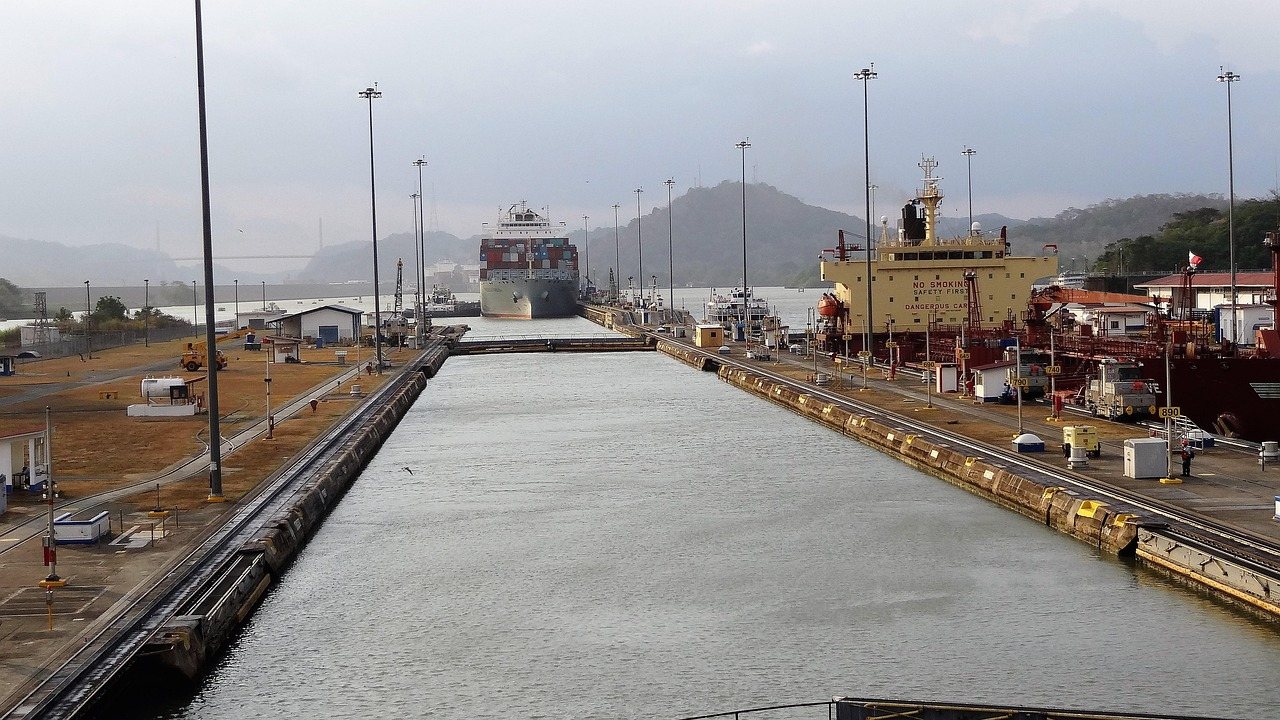
Ocean carriers are raising surcharges as the Panama Canal continues to take precautionary measures in case of a drought. The Panama Canal has been implementing water-saving measures to prepare for potential weather impacts from the looming El Niño climate pattern expected in the second half of 2026. The canal spent July and August 2026 taking capacity off the table in half-foot steps. Maximum authorized draft at the Neopanamax locks fell from 49.5 feet in early July to 49.0 feet on July 24, then to 48.5 feet on August 15. The authority later added a hard cap on daily transits — 34 slots from September 4 and 32 from September 15.
Carriers have passed those constraints directly to shippers. Some carriers have announced canal transit surcharges of $200 to $1,000 per forty-foot equivalent unit for mid-September, according to Freightos. CMA CGM updated its Panama Canal surcharges applying to all cargo from September 10, 2026. MSC also revised its Panama Canal Surcharge for shipments to the US East Coast and US Gulf Coast, applying to all cargo from September 10. US East Coast rates remain firmer than US West Coast rates due to reduced capacity and ongoing Panama Canal draft and weight restrictions.
Blank Sailings and Carrier Discipline Are Keeping Rates Elevated
Beyond geopolitics and the canal, carriers themselves are actively managing supply to defend rate levels. Global container shipping rates moved higher for a second consecutive week, with tighter capacity and steady demand pushing Transpacific prices sharply upward, according to the Drewry World Container Index. Drewry said Transpacific demand remains resilient as carriers continue to manage available supply through blank sailings and capacity reductions, with seven blank sailings announced for the following week. Capacity from Asia to the US East Coast fell 9% month over month in August, while capacity to the US West Coast edged down 0.4%, further tightening available space.
Far East exports have grown 25% since 2024, but terminal capacity has increased just 10% in that span, putting pressure on ports and inland logistics networks. That structural imbalance means carriers hold considerable leverage heading into contract negotiations for 2027.
Golden Week Could Be the Tipping Point
The timing of this rate surge is particularly dangerous for importers because the single biggest near-term volume catalyst of the year is still ahead. A new record would most likely come this month, with the traditional Golden Week volume spike driven by shippers including Walmart and Amazon rushing goods out of China before factories close in early October for a mandatory holiday break.
Demand has also surprised to the upside. A 5.7% inbound cargo decline previously forecast for September had been revised significantly, now calling for a 2.8% increase in volumes. This shift may reflect shippers who had been frontloading ahead of the July tariff deadline extending their ordering once a sharp duty hike did not materialize, as well as others increasing shipments as consumers continue to show resilience despite elevated rates of inflation.
Peter Sand of Xeneta noted that if a freight rate record is broken, it is most likely to occur on the trade into the US East Coast, and that even if a new all-time high is not reached, the fact that it is being discussed demonstrates how sensitive critical ocean container shipping trades are to geopolitical forces.
What Importers Should Do Right Now
Facing this environment, there are several concrete steps worth taking immediately. Secure space before Golden Week demand peaks in the final week of September and first days of October — the closer factories get to their holiday shutdown, the tighter allocations become and the higher last-minute bookings will go.
Review every open booking to confirm which carrier surcharges now apply. Panama Canal surcharges from MSC, CMA CGM, Hapag-Lloyd, and ONE apply differently by origin region and gate-in date, and a booking made in July may not reflect charges that took effect in September. The September 1 General Rate Increase was successfully implemented across both coasts, with another round of GRIs anticipated for September 15.
Consider whether West Coast routing via Los Angeles or Long Beach reduces total landed cost relative to East Coast routing through the Panama Canal, particularly for importers in the Midwest or Mountain West whose goods do not need to reach an East Coast distribution center. The all-in cost comparison — including the canal surcharge, inland dray, and transit time premium — can shift the math meaningfully at current rate differentials.
For longer-horizon planning, watch the Xi–Trump summit scheduled for late September. Some shippers who had been frontloading ahead of tariff deadlines are extending their ordering now that a sharp duty hike did not immediately materialize. Any tariff development coming out of that meeting could trigger another demand wave in either direction.
How ASR Can Help
ASR WorldWide Express is a licensed freight forwarder (FMCSA MC# 1667345-B, DOT# 4286843, SCAC AZCB) based in Miami, FL, with hands-on experience navigating volatile transpacific market conditions. When rates are moving this fast, the difference between a booked container and an unconfirmed allocation can cost more than a week's worth of rate increases. Our team coordinates with licensed customs broker partners to support full door-to-door service, including customs clearance, drayage, and warehousing. We monitor carrier surcharge schedules daily and work to match your cargo to the most cost-effective routing available given current Panama Canal and Hormuz-driven constraints.
Contact us to review your upcoming shipments and lock in space before Golden Week tightens the market further.
Phone: +1 786 373 3003
Email: shipping@asrwe.com
Important Disclaimer
This article is for informational purposes only and does not constitute legal, financial, or customs advice. Ocean freight rates, carrier surcharges, Panama Canal restrictions, and tariff conditions are changing rapidly. Importers should consult their licensed customs broker and freight advisor for guidance specific to their commodity, routing, and commercial terms before making shipping or sourcing decisions.