The Rate That Caught Everyone Off Guard
Ocean freight was supposed to be getting cheaper by now. After a tariff-driven frontloading frenzy pushed transpacific volumes to historic highs earlier this summer, most analysts expected rates to retreat through August and into September. They were wrong — at least on the US East Coast. As of the week of August 11, 2026, East Coast rates, which had been roughly stable since hitting the $9,000/FEU mark in early July, climbed to a new high of $9,400/FEU. This resilience is taking most observers by surprise. If you are routing shipments from Asia through the Suez Canal or Panama Canal to East Coast ports, understanding exactly why this is happening — and what you can do about it — is urgent business.
A Market Splitting in Two
The defining feature of the August 2026 ocean freight market is a widening split between trade lanes. Asia–US West Coast and Asia–Europe rates are correcting, while the US East Coast, Indian Subcontinent, and selected Oceania lanes remain firm. Put numbers to that and the picture is stark: the transpacific is split by coast — US West Coast is down 2–4% month over month, while US East Coast is up 13–15%.
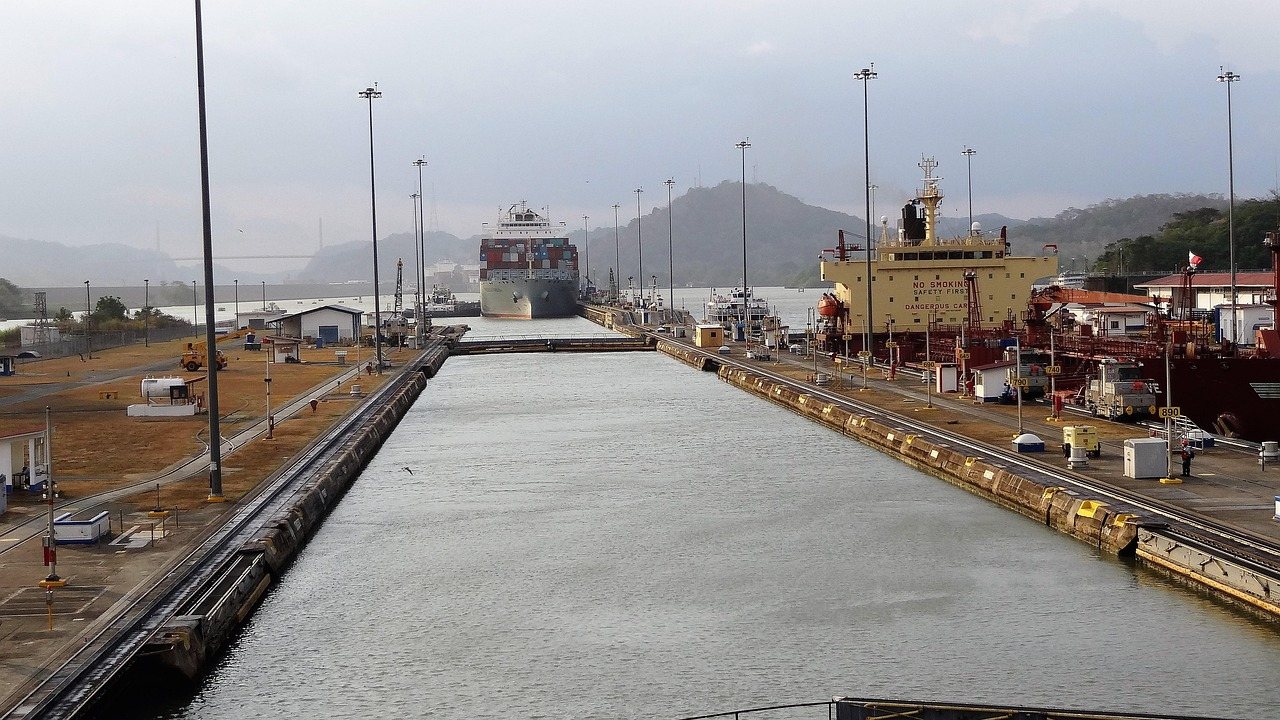
The West Coast divergence has a straightforward explanation. West Coast prices fell through most of July, possibly due more to capacity additions than volume drops, though rates have climbed roughly $1,300/FEU since the start of August to around $7,400/FEU. Meanwhile, the US East Coast market remains under stronger pressure due to limited effective capacity and Panama Canal–related operational challenges. Panama Canal restrictions, fuel surcharges, and weather disruptions in South China continue to impact costs and schedule reliability across the board, but the East Coast bears a disproportionate share of those effects since most Asia–USEC services must transit the canal.
Two Chokepoints, One Crisis
The Panama Canal is only part of the story. The bigger structural factor keeping East Coast rates elevated is the simultaneous disruption at two of the world's most critical maritime chokepoints: the Strait of Hormuz and the Red Sea.
An Iran-Oman initiative to reopen the Strait of Hormuz stirred optimism last week, but Iran's escalated list of demands — including a ban on US vessels, transit fees, and reparations for US strikes — has mostly dashed those hopes and pushed the situation back to a wartime status quo of Iranian attacks, a US blockade, and minimal transits.
On the Red Sea, the situation deteriorated further on August 12, 2026. A strike on a merchant ship off the southern coast of Yemen that reportedly killed several seafarers threatens to reignite deep concerns about global trade, amid the ongoing Iran–US conflict that has choked shipping in the Strait of Hormuz. The last few weeks have seen attacks extended via Iranian proxies to the Bab el-Mandeb Strait, Saudi ports in the Red Sea, and even Egypt.
Security risks remain elevated with continued Houthi attacks and attempted strikes demonstrating both capability and intent to target commercial shipping, and escalating attacks or broader targeting could rapidly trigger larger-scale vessel diversions, higher costs, and further pressure on Red Sea trade routes.
The combined effect is a capacity squeeze that ripples across every major East–West trade lane. About 12–15% of global trade and 30% of Asia–Europe container traffic normally transit the Red Sea. The world's major ocean carriers have diverted vessels around the Cape of Good Hope, adding 3,000–3,500 nautical miles and 10–14 days to Asia–Europe and Asia–US East Coast voyages. That extra sailing time removes vessels from active service, tightening effective fleet capacity for everyone.
Blank Sailings Amplify the Squeeze
Carriers are not simply absorbing the demand that remains — they are actively managing capacity to defend rate levels. Across the major East–West trades, 58 blank sailings are expected from week 32 through week 36 (August 3 through September 6), out of 723 planned sailings — representing an 8% cancellation rate. The greatest concentration of cancellations is on the transpacific eastbound trade, followed by Asia–North Europe and Mediterranean services and the transatlantic.
Blank sailings remain a significant factor in August, particularly on Asia–to–US East Coast services, where carrier cancellations and service adjustments are limiting available capacity, while the US West Coast has remained comparatively more stable.
Carriers are using blank sailings, string cuts, and surcharges to keep softer demand from turning into a broad rate collapse. The result for shippers is a market where available vessel space can disappear with little warning, and rolling cargo to the next available sailing becomes a real risk — particularly on the East Coast, where fewer strings operate and there is less redundancy when a sailing is canceled.
The Demand Picture: Peak Season Stretched, Not Broken
Another reason East Coast rates are holding firm is that the demand backdrop — while clearly past its peak — is not collapsing as fast as some had predicted. Earlier this summer the NRF had projected a sharp July peak in US container arrivals followed by a significant drop in August and into September, but has now revised that outlook to more even, elevated demand through September.
This shift may reflect some shippers who had been frontloading ahead of the July tariff deadline extending their ordering now that a sharp duty hike did not materialize, while others who had been cautious due to economic uncertainty may be increasing shipments as consumers continue to show resilience despite elevated inflation.
By the numbers, major US ports handled 2.23 million TEU in June, reflecting a 13.2% year-on-year increase as importers moved cargo ahead of newly imposed tariffs and in response to international supply chain uncertainties. August is forecast at 2.22 million TEU. The critical nuance is that even as overall volume begins to moderate, capacity is being managed tightly enough by carriers to prevent any meaningful rate relief on the East Coast.
Hapag-Lloyd has even raised its annual outlook due to stronger-than-expected freight rates and demand, while cautioning that geopolitical risks remain significant.
What This Means for Importers Routing via the East Coast
If your supply chain runs from factories in China, Vietnam, India, or Southeast Asia to distribution centers in the Southeast, Mid-Atlantic, or Northeast United States, this rate environment has direct consequences for your landed cost calculations.
The overall outlook suggests that August will remain a seller's market for ocean freight, particularly on Asia–North America routes, and ongoing geopolitical uncertainty, elevated fuel prices, and carrier capacity management are likely to keep freight rates above historical averages throughout the month.
Five actions are worth taking immediately. Book space as early as possible — rolling cargo is a growing risk when blank sailings reduce available vessels. Request firm space confirmation rather than provisional bookings. Review your incoterms to understand exactly where ocean freight cost and risk transfer, especially if your terms are FOB origin. Consider whether a West Coast port plus inland intermodal move offers a better total landed cost than a direct East Coast sailing, given the current rate disparity. And confirm your cargo insurance is up to date, since war-risk premiums have risen sharply on routes anywhere near the Middle East conflict zone.
The transpacific market is entering a period of adjustment following the sharp rate increases and capacity constraints seen earlier this summer, and carrier network changes scheduled for late August and September may provide additional options on some trade lanes, but blank sailings, weather disruptions, and capacity constraints remain important risks.
How ASR Can Help
Navigating a freight market this complex requires more than a rate quote — it requires real-time intelligence, carrier relationships, and experienced routing decisions made before problems arise. ASR WorldWide Express is a licensed freight forwarder (FMCSA MC# 1667345-B, DOT# 4286843, SCAC AZCB) based in Miami, FL, with direct experience across transpacific trade lanes and East Coast port operations. Our team works with trusted licensed customs broker partners to coordinate seamless clearance once your cargo arrives, so there are no surprises on the dockside. Whether you need FCL space confirmed on an Asia–USEC service, want to explore West Coast alternatives with onward rail or truck, or simply need someone to monitor your booking against the latest blank sailing announcements, we are ready to help.
Call us at +1 786 373 3003 or email shipping@asrwe.com to discuss your shipments and get current rate guidance tailored to your specific lanes and volumes.
Important Disclaimer
This article is intended for informational purposes only and does not constitute legal, financial, or customs compliance advice. Freight rates, surcharges, blank sailing schedules, tariff classifications, and geopolitical conditions change rapidly. All figures cited reflect publicly available market data as of August 12, 2026, and may have changed by the time you read this. Importers and exporters should consult their licensed customs broker, trade attorney, and freight forwarder for guidance specific to their shipments.