A New Tariff Threat Reshaping Global Trade Lanes
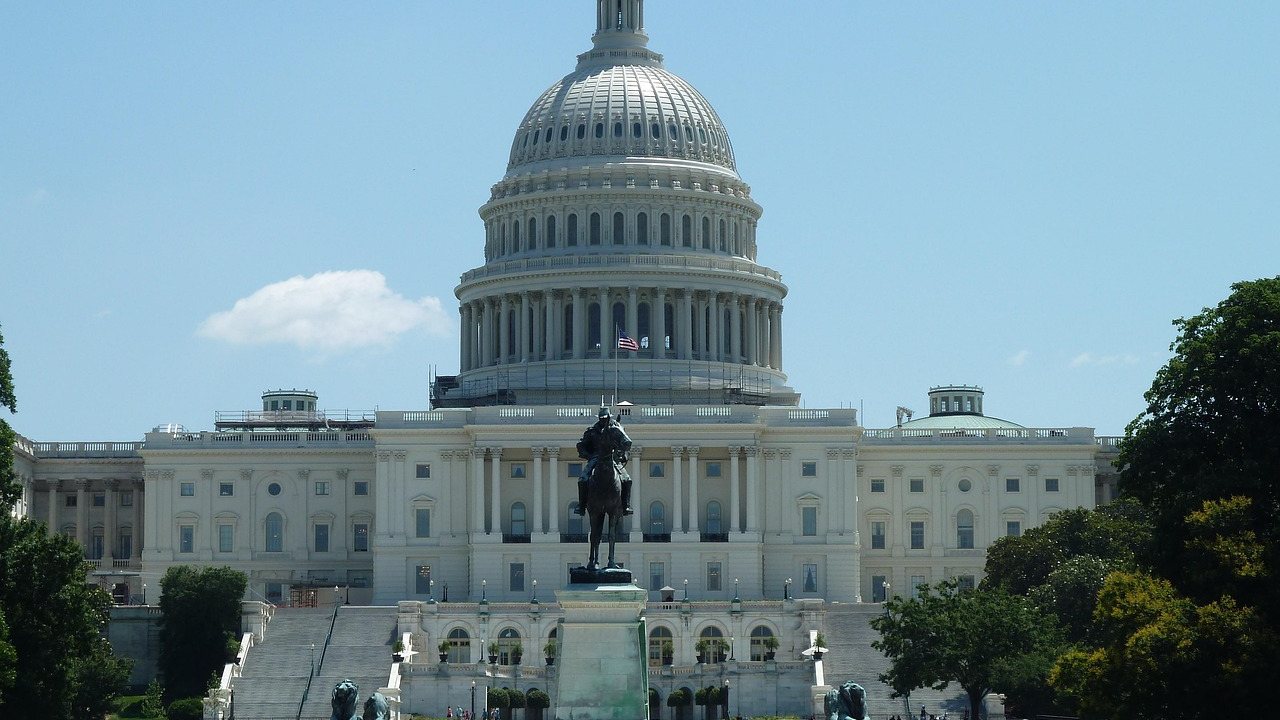
Just when importers thought the tariff landscape could not grow more unpredictable, Washington produced a fresh shock. The US Senate cleared a procedural vote 86–12 on July 29 on the Lindsey O. Graham Sanctioning Russia and Iran Act of 2026. The legislation does not target America's trading partners directly for trade imbalances or domestic subsidies — it targets them for buying Russian oil, gas, and uranium. The legislation allows the president to impose targeted tariffs on imported goods from countries that buy the vast majority of Russian oil or gas, and enable Russian sanctions evasion. For any business sourcing products from India, China, Turkey, or other named economies, this bill is not a geopolitical abstraction. It is a potential cost shock sitting in a congressional committee.
What the Bill Actually Does
The Lindsey O. Graham Sanctioning Russia and Iran Act of 2026 would impose primary and secondary sanctions against Russia and actors supporting its war in Ukraine. The sanctions target Russian officials, oligarchs, their family members, foreign persons and Russian banks and financial institutions, as well as the Russian Shadow Fleet.
On the tariff side, the bill's language is precise. Rather than imposing a blanket 500 percent tariff on countries buying Russian energy, the revised version authorizes tariffs of up to 100 percent targeting the top five purchasers of Russian oil and natural gas, a group that sponsors said includes China and India. The legislation directs the US Trade Representative — not the president directly — to impose tariffs of up to 100 percent on imported goods from the five largest purchasers of Russian crude oil and the five largest purchasers of Russian natural gas.
Section 113 of the bill specifically targets the five countries that purchase the largest volumes of Russian fuel or facilitate sanctions evasion through shadow fleets, threatening them with additional 100 percent tariffs. India, China, Slovakia, Hungary, and Azerbaijan are named as countries that could face punitive tariffs. Crucially, China, which is the top importer of both Russian crude oil and natural gas, would face a 100 percent tariff under the terms of the bill text, though the tariffs cannot be stacked, or doubled, to reach 200 percent.
The bill also extends its reach to the shadow fleet. The provision extends to nations enabling sanctions evasion through shadow fleet tanker operations, a mechanism widely used to bypass restrictions on Russian oil exports.
Why China and India Are the Bill's Principal Targets
The reason these two economies sit squarely in the crosshairs is volume. China and India together absorb more than 80 percent of Russia's seaborne crude exports, making them the bill's principal targets. China accounts for roughly 50 percent and India for roughly 40 percent of Russia's seaborne crude exports, and together they cover about 60 percent of Russia's natural gas exports.
That group currently includes China, India, Turkey, and — for liquefied natural gas and pipeline gas — certain European Union member states, according to data from the Centre for Research on Energy and Clean Air. The legislation also creates exemptions for countries importing less than 15 percent of Russia's annual natural gas exports, provided they are taking significant steps to reduce their dependence on Russian energy. US allies that can show meaningful diversification away from Russian supply have a credible path to exemption; China and India, at their current import levels, do not.
The Legislative Path: Senate Passed, House Still to Come
The bill has more than 60 cosponsors and is therefore expected to easily pass the Senate, with Tuesday night's vote setting the bill up for final passage some time later this week. After clearing the Senate, there will be a delay before the bill can move forward to the House, which is now in summer recess.
The House is a less certain path. Trump's demand to add Iran tariff authority will almost surely complicate the bill's pathway to passage in the House, which is expected to pick up the Senate-passed version under suspension, prohibiting amendments to the text and requiring a two-thirds majority for passage. There is concern that Democrats critical of the tariff authorities in the bill may upset passage, though some senators who held those concerns voted in favor of the bill on Tuesday night after speaking with Ukrainian President Volodymyr Zelensky, who urged its passage as is.
Critically, the bill contains a built-in safety valve. The legislation contains a waiver, consistent with other mandatory sanctions bills, allowing the president to waive sanctions, restrictions, or duties upon a justification and certification to Congress. The bill does not automatically impose tariffs, leaving the final decision to the US president, who can waive or delay the measures — giving countries room for diplomatic negotiations even as the threat looms.
The India Precedent: A Preview of What Is at Stake
The India case is instructive because Washington has already run this experiment once. The United States imposed an additional 25 percent ad valorem duty on certain imports from India, effective August 27, 2025, raising the total tariff rate to 50 percent. According to the president's executive order, the tariff was a response to India's indirect importation of Russian oil.
The economic damage was immediate and documented. India's goods exports to the US dropped 8.6 percent year-on-year in October 2025, following a 12 percent fall in the previous month, owing to the steep 50 percent tariffs. Engineering goods exports in October plunged 16.71 percent, while exports of textiles and apparel fell 8.34 percent and gems and jewellery dropped 25 percent.
Diplomacy ultimately broke the deadlock. In February 2026, President Trump and Prime Minister Modi agreed to reduce US tariffs on Indian imports from 50 percent to 18 percent, after India committed to curbing purchases of Russian oil. That diversification plan was disrupted just weeks later by the Iran conflict and the closure of the Strait of Hormuz, which constrained oil and gas exports from the Gulf. Now, with Russia's energy buyers potentially facing a new statutory tariff ceiling of 100 percent, the old bilateral bargain is fragile.
What This Means for US Importers Right Now
Even before this bill becomes law, its existence reshapes importer risk calculus in concrete ways. Any company sourcing finished goods, components, textiles, gems, pharmaceuticals, or industrial inputs from India or China is already operating in an environment where the tariff floor can shift with a congressional vote.
The bill's tariff mechanism, unlike the executive-order-based tariffs that were struck down earlier in 2026, rests on firm constitutional footing. A fact entirely absent from most coverage of the Sanctioning Russia Act is that the legal architecture powering its tariff provisions is fundamentally different from — and more constitutionally durable than — the tariff authorities the Trump administration relied on from 2025 until February 2026, when the Supreme Court ruled 6-3 that IEEPA does not authorize the president to impose tariffs. Tariffs enacted by an explicit act of Congress cannot be challenged on the same grounds. If the House passes this bill and the president signs it, there is no IEEPA vulnerability to exploit through litigation.
Importers should also watch the USTR review cycle. The legislation directs the US Trade Representative to review the list of covered countries every 180 days, ensuring that countries cannot escape coverage by temporarily reducing purchases. That rolling review means supply-chain exposure is not a one-time assessment — it must be monitored continuously.
The Waiver Clause and Diplomatic Wild Cards
Not everything about this bill points toward escalation. Unlike previous congressional sanctions legislation such as CAATSA, the sanctions on Russia are for the most part not mandatory, but are rather at the president's discretion, and the bill includes all the usual waivers for national security reasons. The Trump White House likely sees the sanctions bill as negotiating leverage and as a demonstration of US toughness to Putin and other Western states. A president who used tariff threats on India to extract energy-sourcing commitments in early 2026 will have even sharper leverage once a statutory 100 percent tariff authority sits on his desk.
For importers, the waiver clause is cold comfort. Waivers can be granted or revoked. Country-specific tariff status can change between a purchase order and the date of customs entry. The prudent response is to treat statutory tariff exposure as real until diplomatic resolution proves otherwise.
How ASR Can Help
Navigating a tariff environment this volatile demands more than a spreadsheet and a lucky guess. ASR WorldWide Express is a licensed freight forwarder (FMCSA MC# 1667345-B, DOT# 4286843, SCAC AZCB) based in Miami, FL, and we partner with trusted, licensed customs broker professionals to help importers classify goods correctly, calculate total landed cost under current and potential tariff scenarios, and plan routing strategies that reduce duty exposure wherever permissible under the law. Whether your supply chain runs through Mumbai, Shanghai, or any of the other economies named in this legislation, our team monitors regulatory developments in real time and advises clients before a tariff surprise appears on a customs entry.
Call us at +1 786 373 3003 or email shipping@asrwe.com to discuss how your current sourcing strategy holds up against the tariff scenarios this bill could trigger.
Important Disclaimer
This article is for informational purposes only and does not constitute legal, tax, or trade compliance advice. Tariff rates, country coverage, waiver status, and legislative outcomes described here are subject to change as the bill moves through the House of Representatives and as administrative decisions evolve. Importers should consult a licensed customs broker and qualified trade counsel before making sourcing or classification decisions based on any tariff scenario discussed in this article.