Six Days and Counting
As of July 18, 2026, U.S. importers have six days until one of the most consequential deadlines in recent trade history. On July 24, the temporary 10% global import surcharge that replaced the Supreme Court-struck IEEPA tariffs will expire by law — and the administration is racing to slot Section 301 tariffs into its place before the clock runs out. The result is a market in suspended animation: ocean freight spot rates are retreating, capacity is available, and yet importers are not booking. Policy risk, not price, is now the governing variable in every sourcing decision. If you are importing goods into the United States and have not yet mapped your exposure to the post-July 24 tariff landscape, this is the week that matters.
How We Got Here: The Tariff Chain Reaction
The sequence that produced this deadline began on February 20, 2026. The U.S. Supreme Court ruled in Learning Resources, Inc. v. Trump that the administration's sweeping IEEPA tariffs — the double-digit duties that had defined trade policy since early 2025 — exceeded presidential authority. The defeat was immediate and expensive.
The legal defeat meant the administration had to send refunds to importers that had paid the levies. Tariff revenue, which had peaked at more than $31.4 billion in a single month last October, went from a Treasury windfall to a drain almost overnight.
Within days, the White House responded by invoking Section 122 of the Trade Act of 1974 — a rarely used emergency statute — to impose a flat 10% surcharge on virtually all imports. But Section 122 carries two hard limits written into law: the rate cannot exceed 15%, and the authority cannot last more than 150 days. That clock started February 24, 2026. It runs out on July 24, 2026. The President cannot extend it unilaterally, and Congress has not moved to do so.
Section 301: The Permanent Replacement
The administration was not waiting passively. Beginning in March 2026, USTR launched two parallel Section 301 investigations designed to rebuild the tariff architecture on more durable legal footing. The first targeted structural excess manufacturing capacity across 16 major economies. The second — broader and more immediate — targeted forced labor enforcement practices across 60 trading partners collectively accounting for roughly 99% of all U.S. import volume.
On June 2, 2026, USTR announced affirmative determinations across all 60 forced labor investigations and proposed a two-tier tariff response: a 10% additional duty on economies that have made compliance commitments, and a 12.5% additional duty on the remaining 45. The agency is targeting a final decision by July 20 — just four days before Section 122 lapses — to ensure the new rates are in place at the handoff.
Unlike Section 122, Section 301 tariffs carry no expiry date and no rate cap. Once in place, they can run for years and can be raised by product list at any time. The 10% Section 122 baseline is likely the lowest duty rate importers will see for the foreseeable future on affected origins.
Why Ocean Freight Rates Are Falling Right Now
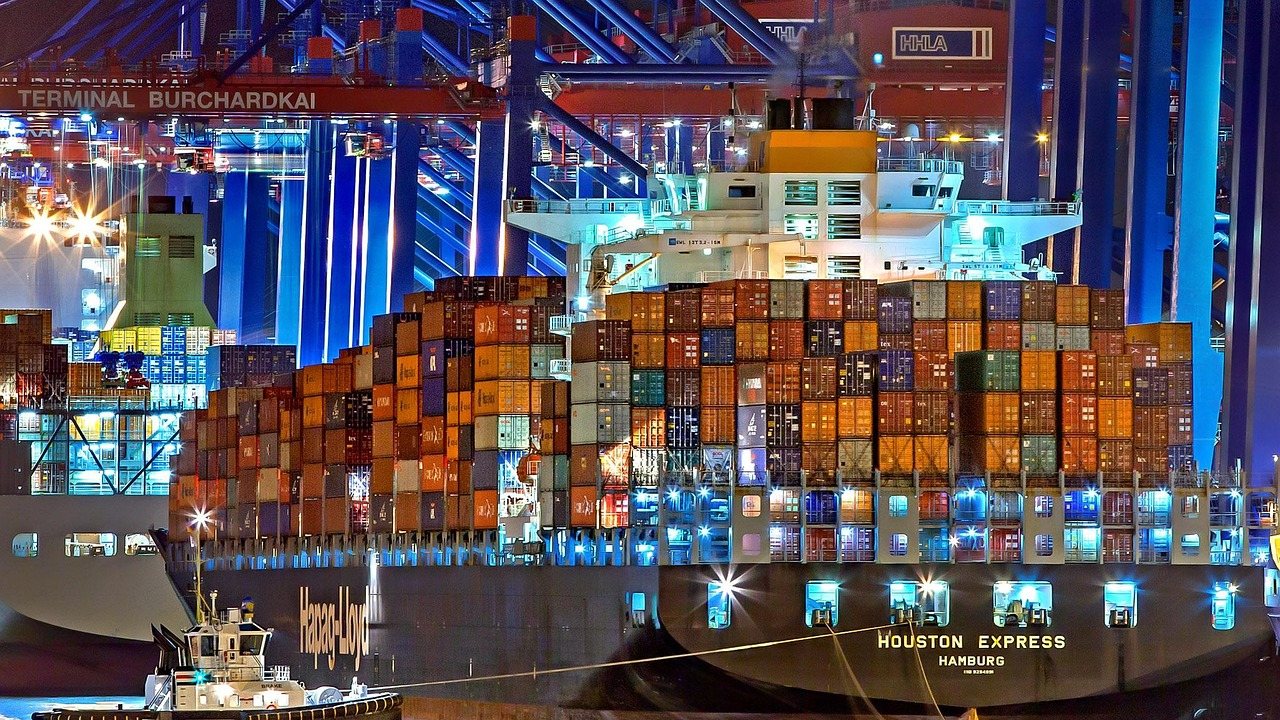
Spot freight rates on the trans-Pacific are retreating — not because the market is healthy, but because importers have effectively stopped booking while they wait for July 24 clarity. Many importers are postponing customs clearance, or delaying shipments altogether, until there is greater certainty about what happens after the current tariff period expires.
Despite the rate reductions, freight forwarders are not seeing any meaningful increase in booking activity, suggesting importers remain focused on policy risk rather than transportation costs. Current spot rate indicators show China-to-U.S. West Coast prices as low as $4,680 per container and China-to-U.S. East Coast prices as low as $6,700 — with the week-over-week decline reflecting weakening booking activity rather than any increase in available capacity.
The near-term outlook, according to market analysts, points to a market that is likely to hold steady or gradually decline rather than move higher, with the recent peak appearing to have already passed. Carriers are expected to manage any decline carefully, but without a rebound in volume they have limited room to defend current rate levels.
The traditional late-summer peak season may already be over before it began. Many importers accelerated shipments during May and June to stay ahead of tariff deadlines, effectively pulling the peak forward by six to eight weeks. With that inventory already in warehouses, the normal August-September retail restocking surge may not materialize.
The Two-Scenario Fork in the Road
The next two weeks will determine the direction of the trans-Pacific market for the rest of 2026, and the fork is sharp.
If USTR finalizes Section 301 tariffs on or near the July 24 handoff, the practical outcome for the 46 listed countries is a modest rate increase from 10% to 12.5%, on top of existing MFN and any prior Section 232 exposure. Importantly, goods that are already on the water when Section 122 lapses will have their duty rate set by the date of entry into U.S. customs — not the ship date. Importers with shipments currently at sea should be working with their licensed customs broker partners right now to understand how entry timing could affect their landed cost.
If USTR's decision slips past July 24 — due to litigation, comment-period challenges, or procedural delay — Section 122 simply lapses with nothing behind it. Imports would briefly revert to pre-IEEPA baseline MFN rates plus any existing Section 232 tariffs. For Vietnamese, Indian, or Bangladeshi goods, that would represent a significant temporary drop from 10% down to low-single-digit MFN duties. That brief window would be the cheapest import opportunity since early 2025.
If tariffs remain elevated or increase, market participants expect booking volumes to weaken further, putting additional downward pressure on freight rates through the summer.
What Is Not Changing on July 24
Several tariff categories sit entirely outside the Section 122 sunset and will be unaffected regardless of what happens. Section 232 tariffs on steel, aluminum, copper, automobiles, and semiconductors operate under separate statutory authority and will continue unchanged. The existing China-specific Section 301 tariffs imposed in earlier trade proceedings — covering roughly $370 billion in Chinese goods at rates from 7.5% to 100% — also predate 2026 and survive July 24 in full.
EU-origin goods moved to a separate trade deal structure on July 1, 2026, at an all-inclusive 15% ceiling. USMCA-qualifying goods from Mexico and Canada were never subject to Section 122 and will retain that exemption. The July 24 deadline is primarily a story about non-EU, non-USMCA general merchandise — apparel from South Asia, electronics from Southeast Asia, machinery from Japan and Korea, and consumer goods from across the 46-country Section 301 proposed list.
An entirely separate Section 301 proceeding covering Brazil is also moving on a parallel track, with a public hearing held July 6 and 7 and a USTR decision expected shortly, proposing a 25% duty on most Brazilian goods.
The Strategic Window Importers Are Missing
Paradoxically, the same uncertainty that is freezing demand is creating a tactical opportunity for importers who understand the landscape. Lower spot rates and readily available vessel space — conditions that have been rare over the past two years — are available right now. The question every importer should be asking is whether their goods fall into a category that faces a higher tariff after July 24, and if so, whether accelerating entry timing before the deadline makes financial sense.
Entry timing is everything in this environment: duty rates are set by the date of entry into U.S. customs, not the date goods left their origin port. Goods already on the water can land before or after the July 24 line depending on when entries are filed — a decision that requires coordination between your freight forwarder and your licensed customs broker. Importers who treat this as a passive waiting period are likely to find themselves repricing contracts and absorbing duty increases in August with no recourse.
At the same time, importers sourcing from origins that are not on the forced labor Section 301 list — or from countries that negotiated compliance carve-outs — should confirm their specific exposure immediately, as the final tariff architecture may treat some origins differently than the current proposal suggests.
How ASR Can Help
At ASR WorldWide Express, we work with licensed customs broker partners to help importers navigate exactly this kind of transitional moment — when the tariff rules are changing, the entry timing window is narrow, and the cost of waiting is real. Whether you need help coordinating ocean freight bookings on the trans-Pacific at current spot rates, managing shipment timing around the July 24 deadline, or understanding how the Section 301 transition affects your specific origin and commodity, our team is available now.
Call us at +1 786 373 3003 or email shipping@asrwe.com. With six days to the deadline, there is no value in waiting to have this conversation.
Important Disclaimer
This article is for informational purposes only and does not constitute legal, tax, or customs compliance advice. Tariff determinations, entry classifications, duty rates, and protest deadlines are fact-specific and change rapidly. Importers should consult a licensed customs broker and qualified trade counsel before making any decisions based on the regulatory landscape described above.