A 180-Day Clock Is Now Running on Your Machine Shop's Imports
If your business imports CNC machining centers, lathes, grinding equipment, laser cutters, or specialty metalworking tools from Japan, Germany, South Korea, Taiwan, or Switzerland, a countdown began on October 28, 2026. That morning, President Trump signed a Section 232 proclamation declaring that these imports threaten U.S. national security — and he gave trade negotiators 180 days to reach agreements with foreign suppliers before deciding what tariff, quota, or other remedy to impose. The door to new duties is wide open. No manufacturer importing capital equipment should treat this as business as usual.
What the October 28 Proclamation Actually Does
The proclamation is not a tariff — at least not yet. As verified sources confirm, it concludes the Commerce Department's Section 232 investigation and opens a negotiation phase. It does not immediately impose new tariffs, quotas, fees, or HTS code changes on any imports.
On October 28, 2026, President Trump issued a proclamation agreeing with the U.S. Secretary of Commerce that imports of robotics, industrial machinery, and their parts and components threaten to impair U.S. national security. The proclamation directs negotiations with trading partners and does not impose new tariffs at this time.
While the proclamation does not immediately impose new tariffs, it explicitly states that the president may deploy alternative remedies depending on the progress of negotiations. These potential future actions include imposing or modifying tariffs, duties, quotas, and fees, as well as establishing a program to incentivize new investment in domestic production.
Importers should note one critical operational point: the proclamation does not state specific HTS headings or subheadings. Importers must continue using existing HTS classifications unless and until a subsequent Federal Register notice, proclamation, or CBP guidance specifies otherwise.
What Equipment Is In Scope
The scope of this investigation is broad and touches nearly every category of precision capital equipment that U.S. manufacturers import.
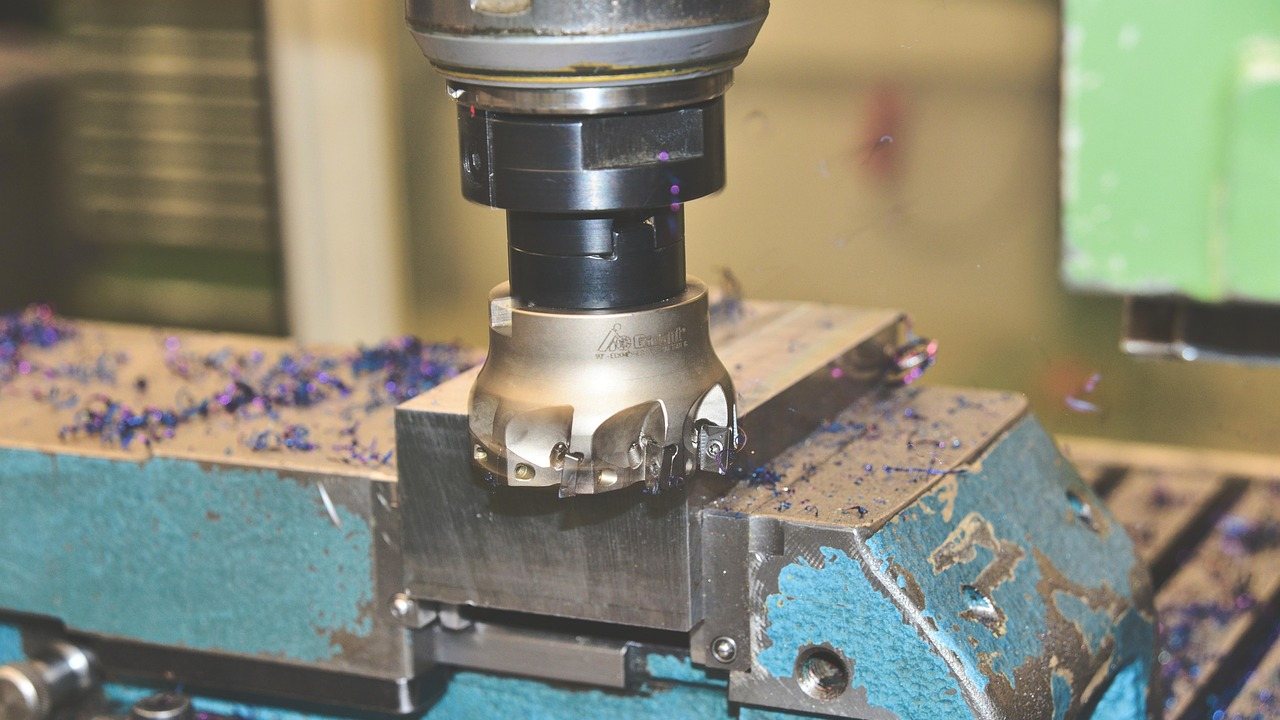
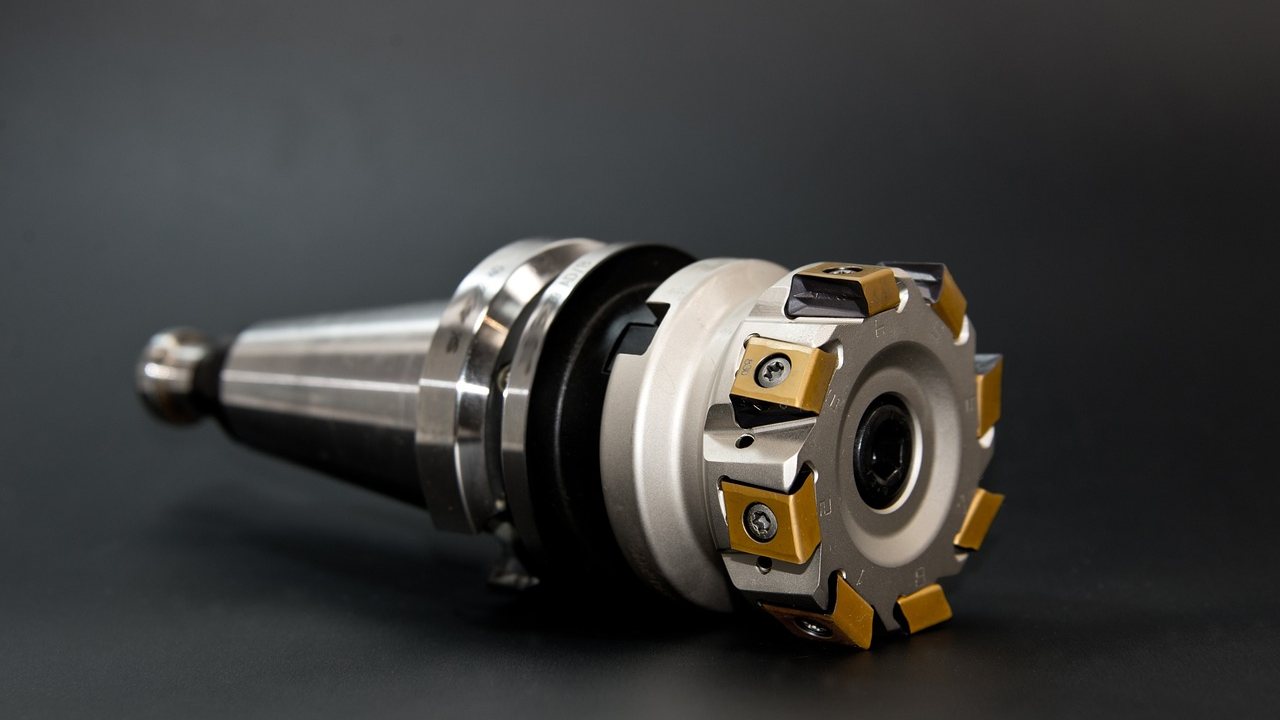
The investigation covered CNC machining centers, turning and milling machines, grinding and deburring equipment, and industrial stamping and pressing machines, along with automatic tool changers, jigs and fixtures, and machine tools for cutting, welding, and handling workpieces. Its scope also covered specialty metalworking equipment used to treat, form, or cut metal, including autoclaves and industrial ovens, metal finishing and treatment equipment, EDM machinery, and laser and water-cutting tools.
Unmanned aircraft systems were excluded because they are covered by a separate Section 232 investigation.
In practical terms, this covers the dominant portion of the capital equipment found on the floor of a U.S. job shop or Tier-2 supplier. The majority of these machines are sourced from Japan, Germany, South Korea, Switzerland, and Taiwan — precisely the countries named by the Commerce Department in its deliberations.
The Tariff Stack Already Hitting Machine Tool Importers Today
Even without new Section 232 measures, importers of CNC equipment are already navigating a significant cost stack. Understanding the current baseline is essential for modeling what an additional layer could mean.
Much of the production tooling, such as cutting tools, dies, and molds, is currently covered by a separate Section 232 action on steel derivatives, typically at 25% on Annex I-B or 15% on Annex III.
Machines not covered by the steel/aluminum Section 232 tariffs still face a Section 301 Forced Labor tariff of 10% or 12.5%.
Existing Section 232 tariffs, including those on steel, aluminum, and copper, are not modified by the October 28 proclamation.
Origin matters enormously under the current framework. Based on published tariff schedules, a CNC machining center from Germany currently falls under the EU-U.S. trade deal's all-inclusive ceiling, while Japanese- and South Korean-origin machines face base MFN duties stacked with the Section 301 forced-labor surcharge. Chinese-origin machinery carries the heaviest burden, with Section 301 duties stacked on top of MFN rates and any applicable Section 232 metal duties. If new Section 232 machine-tool tariffs are eventually imposed, these stacks will grow further.
What Commerce Found — and Why It Matters
The proclamation did not come without evidence. The Commerce Department's investigation identified two distinct vulnerabilities that drove its national security finding.
The October 28 proclamation follows a Section 232 investigation that found the U.S. depends heavily on foreign suppliers and lacks sufficient domestic production capacity. Commerce also identified potential cybersecurity risks associated with certain imported industrial systems.
The proclamation notes that robotics and industrial machinery support the production of essential, state-of-the-art defense systems, such as aircraft, tanks, ships, weapons, and munitions, as well as certain military and law enforcement activities.
This is precisely why a simple tariff delay is unlikely to be the end of the story. When national defense production is explicitly cited as the rationale, the administration has strong domestic political cover to impose remedies after the negotiation window closes — if trading partners do not deliver satisfying commitments.
The April 2027 Deadline and What Follows
The 180-day clock runs from October 28, 2026. That puts the required progress report to the president on or around April 26, 2027.
Trump directed Commerce Secretary Howard Lutnick and U.S. Trade Representative Jamieson Greer to negotiate with trading partners to address those imports and to report on their progress within 180 days, leaving the door open to subsequent tariffs.
The Section 232 action covering robotics and industrial machinery does not currently impose new duties. The potential scope is broad.
For importers, the April 2027 update is the critical decision point to watch. If negotiations produce bilateral commitments — for example, agreements from Japan or the EU to expand domestic machine-tool production capacity or to restrict re-exports to adversaries — remedies may be limited or avoided. If talks stall, the administration can impose tariffs, quotas, or both without returning to Congress. Importers who wait until April to start planning will be too late.
What Manufacturers Importing Capital Equipment Should Do Now
The 180-day window is a planning window, not a grace period. Manufacturers and machine shops should take several concrete actions before the April 2027 update.
Audit your current machine tool sourcing by country of origin
Map every piece of capital equipment you plan to import in 2026–2027 against its country of manufacture. For equipment with components sourced from multiple countries, work with your customs broker to confirm the correct country of origin determination under the substantial transformation test. This baseline is essential for modeling tariff scenarios.
Model worst-case landed cost under potential new duties
The Commerce Department had been evaluating a 15% or 25% tariff on machinery and components from countries beyond China. The DOC had been considering a 15% or 25% tariff on industrial machines, robotics, and their components for countries beyond China, specifically citing machines from the European Union, Switzerland, Japan, South Korea, and components from Taiwan. Add those percentages to your current landed cost and see how your capital equipment budget responds. For high-value machining centers, even a 15% tariff on a $250,000 import represents $37,500 in additional cost.
Accelerate purchases of planned capital equipment where justified
For equipment your business has already budgeted and whose ROI is clear, the current period — before any tariffs take effect — may be the optimal import window. This is not a recommendation to over-invest speculatively, but if a $400,000 five-axis machining center is on your two-year plan, the math of importing it before April 2027 may be compelling.
Explore USMCA-origin options where available
Some capital equipment is manufactured in Canada or Mexico under USMCA rules. Where qualifying alternatives exist and specifications are comparable, USMCA-origin equipment may offer protection from future Section 232 machine-tool tariffs, depending on how any final remedy is structured.
Engage your freight forwarder and customs broker now
This is not the moment for a reactive approach. A licensed customs broker can help you confirm HTS classifications, review country-of-origin documentation, and advise on bonded warehouse or Foreign Trade Zone strategies that could provide flexibility if duties are imposed mid-shipment-cycle.
How ASR Can Help
At ASR WorldWide Express, we specialize in moving capital equipment and industrial machinery from major manufacturing hubs in Japan, Germany, South Korea, Taiwan, and Europe to U.S. manufacturers. Our team coordinates ocean freight, air freight for time-sensitive components, and customs clearance through trusted licensed customs broker partners — giving your procurement team a single point of contact from port of origin to your facility floor. As the Section 232 machine-tool investigation enters its negotiation phase, staying ahead of HTS changes and landed-cost shifts requires a freight partner who monitors these developments in real time. Call us at +1 786 373 3003 or email shipping@asrwe.com to discuss your capital equipment import strategy today.
Important Disclaimer
This article is informational only and does not constitute legal, tax, or customs compliance advice. Tariff classifications, duty rates, and the outcome of Section 232 negotiations can change rapidly. Consult a licensed customs broker and qualified trade counsel to assess the specific impact of current and future trade actions on your imports.