A 50% Tariff Drops to 18%: What Changed for US Importers of Indian Goods
For companies sourcing from India, 2026 has delivered one of the most significant tariff resets in a generation. After months of punishing duties that pushed the effective US tariff on most Indian goods to 50%, a February 2026 bilateral framework slashed that rate to 18% — and as of today, November 13, 2026, negotiations are actively advancing toward a fully formalized deal that could unlock zero duties on additional high-value categories. If you import textiles, pharmaceuticals, leather goods, chemicals, gems, or machinery from India, this article covers every development you need to monitor.
How the US-India Trade Framework Came Together
President Donald Trump and Prime Minister Narendra Modi took a major step to reset fractured ties with a surprise deal to slash tariffs, bringing much-needed relief to India's economy. On February 6, 2026, the United States and India announced a framework for an interim agreement on reciprocal and mutually beneficial trade, marking a significant advance in their bilateral economic relationship.
The joint statement outlined a framework for an interim trade agreement that immediately removes the punitive 25% tariff on Indian goods, envisages reduction of US reciprocal tariffs on Indian goods from 25% to 18%, and commits India to tariff cuts on US industrial and agricultural products, alongside a $500 billion purchase commitment from the US over the next five years.
Today's framework reaffirms the countries' commitment to the broader US-India Bilateral Trade Agreement negotiations, launched by President Trump and Prime Minister Modi on February 13, 2025, which will include additional market access commitments and support more resilient supply chains.
The 18% Rate: Which Indian Products Does It Cover?
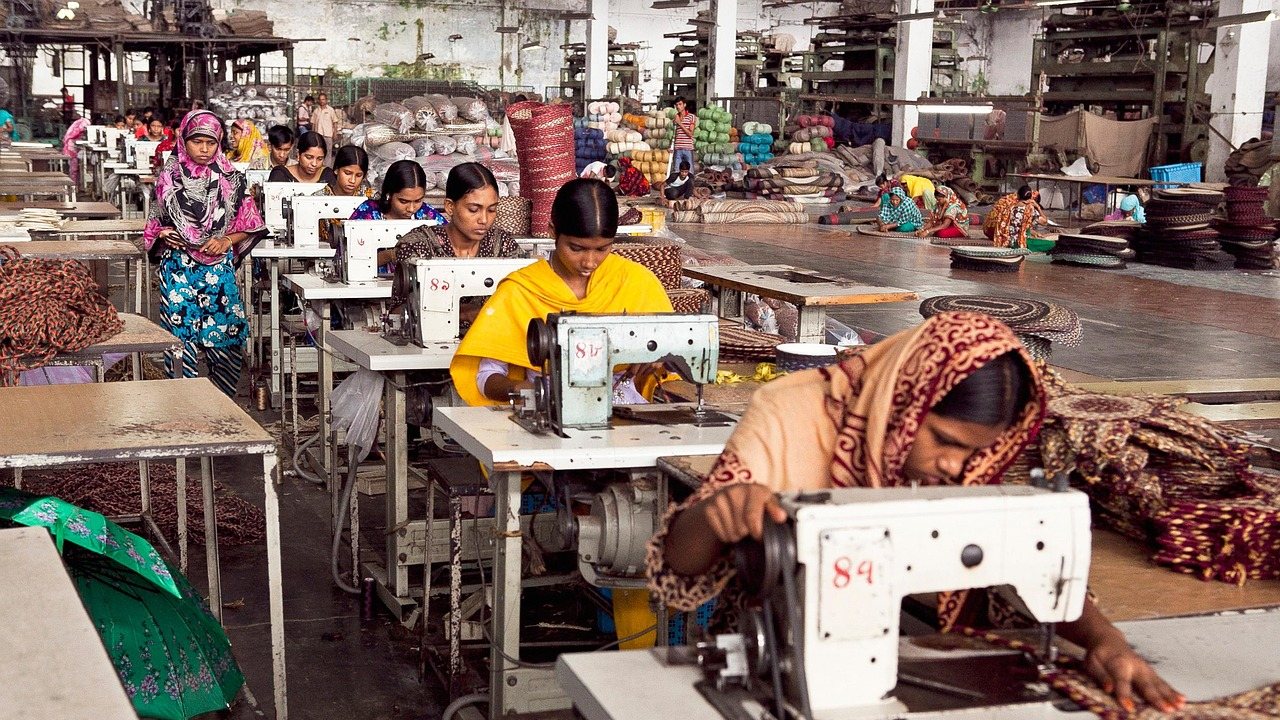
The deal applies an 18% tariff rate on most imports to the US from India, including textiles and apparel, leather and footwear, plastic and rubber, organic chemicals, home décor, artisanal products, and certain machinery.
The 18% levy is lower than the tariffs faced by regional competitors including Vietnam and Bangladesh, both at 20%. In restoring India's price advantage in the US market, the pact is a reprieve for a wide swathe of labor-intensive exporters — from apparel and footwear makers to jewelers — who had been enduring a punitive 50% levy since August.
Once the interim agreement has been finalized, the US said it will remove reciprocal tariffs on a range of goods that include generic pharmaceuticals, gems and diamonds, and aircraft parts. This creates a clear two-stage opportunity for US importers: relief is already in effect on many product lines, while zero-duty access is on the horizon for high-value categories pending formal signing.
Important Carve-Outs: What the Deal Does NOT Change
The 18% reciprocal tariff framework does not operate in isolation. Several layers of additional US trade measures remain fully in force and can compound costs for importers.
Even after the trade deal, US Section 232 tariffs on steel, aluminum, and copper will remain at 50%, and on a few auto components at 25%. Importers of Indian steel or aluminum-intensive goods must still account for these sector-specific duties, which sit entirely outside the bilateral framework.
Indian goods pay MFN duty plus a forced-labor Section 301 tariff at 10% — India is in the 10% tier of the 60 economies covered since July 24, 2026. Enumerated pharmaceuticals are exempt from the forced-labor tariff. This means the total landed duty burden on many Indian goods is the sum of MFN rates, the 10% Section 301 layer, and any applicable Section 232 duties — not just the headline 18% reciprocal rate. Working with a licensed customs broker to calculate your actual effective rate by HTS code is essential before making sourcing decisions.
With significant tariff changes, proper HTS classification becomes even more important. Misclassification that might have been a minor issue at a 2% duty rate becomes a major compliance risk at 18%.
Rules of Origin: A Critical Compliance Requirement
One of the most consequential provisions of the interim framework is an explicit rules-of-origin requirement. The United States and India will establish rules of origin that ensure that the benefits of the agreement accrue predominantly to the United States and India. This language is a direct response to growing concerns about transshipment — the routing of third-country goods through India to claim preferential tariff treatment.
For US importers, this means documentation requirements will likely become more rigorous. Country-of-origin declarations, supplier certifications, and manufacturing evidence must accurately reflect genuine Indian production. The CBP has been actively scrutinizing transshipment claims across multiple trade flows in 2026, and India is not exempt from that enforcement environment.
Where Negotiations Stand Today: November 13, 2026
The United States has assured India that it will face lower tariffs than its trading peers under the proposed bilateral trade agreement. India and the US had finalized a framework for the trade agreement earlier this year, but its formalization has been delayed by several US trade investigations.
A two-member US team visited New Delhi on November 2–3, 2026 to advance technical discussions on customs and trade facilitation under the proposed India-US bilateral trade agreement. The visit comes amid uncertainty over the broader trade negotiations following the US midterm elections.
The discussions focused on improving trade facilitation, strengthening supply chain security, and exploring digital integration in customs operations.
Commerce Minister Goyal said on Friday that an announcement on the India-US trade agreement could come "quite soon", indicating that negotiations are progressing smoothly, with only a few outstanding issues remaining. The February announcement genuinely changed tariff rates and set direction for a fuller agreement, but it is not itself a signed free trade agreement, and as of October 2026, the follow-on Bilateral Trade Agreement it points toward is still being negotiated.
For importers, this means the 18% rate is real and in effect, but zero-duty access on pharmaceuticals and gems — and the broader set of commitments on non-tariff barriers — remains contingent on formal signature.
Supply Chain Implications: Should You Shift Sourcing Back to India?
The reduction from 50% to 18% tariffs makes Indian textiles significantly more competitive again. Importers who shifted sourcing during the 2025 tariff increases may want to reevaluate their supply chains.
Sectors including engineering goods, textiles and apparel, pharmaceuticals, chemicals, leather products, gems and jewellery, and agricultural products are expected to benefit substantially from the tariff rationalization.
Bilateral trade in technology products, particularly GPUs and data-centre-related goods, is expected to expand significantly, alongside deeper joint cooperation in advanced technologies.
That said, the full Bilateral Trade Agreement is not yet signed. Supply chain decisions based solely on a framework that is still being formalized carry transition risk. Companies should model scenarios for both current 18% rates and the possibility of zero-duty outcomes on pharma and high-tech goods, while maintaining contingency plans if negotiations stall or the midterm political environment reshapes the deal's timeline.
The United States and India agree to strengthen economic security alignment to enhance supply chain resilience and innovation through complementary actions to address non-market policies of third parties, as well as cooperation on inbound and outbound investment reviews and export controls. This provision signals that the deal is as much about geopolitical alignment — particularly vis-à-vis China — as it is about tariff arithmetic.
Practical Steps for Importers Sourcing from India
Audit your HTS classifications
With the tariff environment now more complex — MFN rates, Section 301 layers, Section 232 carve-outs, and a reciprocal tariff baseline all running simultaneously — confirming the correct HTS code for every Indian-origin product you import is the single most important compliance action you can take. An incorrect classification can result in overpaying duties or, worse, being found liable for underpayment.
Verify country of origin documentation
Given the rules-of-origin emphasis in the interim framework, ensure your Indian suppliers can provide documentation that substantiates genuine Indian manufacture. This includes bills of materials, production records, and supplier certifications.
Model your total landed cost
The 18% reciprocal rate is not your total duty exposure. Add your applicable MFN rate, the 10% Section 301 forced-labor tariff where it applies, and any Section 232 exposure. Only then can you accurately assess whether India-sourced goods are competitive against alternatives from Vietnam, Bangladesh, or Mexico.
Monitor the BTA timeline
The formal signing of the Bilateral Trade Agreement will trigger zero-duty access on generic pharmaceuticals, gems, diamonds, and aircraft parts. Businesses in those sectors should build a monitoring cadence — watching USTR announcements, Federal Register notices, and updates from the US Embassy in New Delhi — to act quickly once the formal agreement takes effect.
How ASR Can Help
ASR WorldWide Express is a licensed freight forwarder (FMCSA MC# 1667345-B, DOT# 4286843, SCAC AZCB) based in Miami, FL, with deep experience coordinating ocean and air freight movements from South Asia to the United States. We work alongside trusted licensed customs broker partners to help clients navigate HTS classification reviews, country-of-origin documentation requirements, and compliance planning as the US-India tariff environment continues to evolve. Whether you are re-evaluating your India sourcing strategy or simply need help moving your first shipment from Mumbai or Chennai, our team is ready. Call us at +1 786 373 3003 or email shipping@asrwe.com to get started.
Important Disclaimer
This article is intended for general informational purposes only and does not constitute legal, tax, or customs compliance advice. Tariff rates, rules of origin requirements, and trade agreement statuses are subject to change as negotiations continue. US importers should consult a licensed customs broker and qualified trade counsel before making sourcing or compliance decisions based on the US-India bilateral trade framework.