The Rating Flip That Signals a New Apparel Import Era
For most of 2025, the outlook for U.S. apparel importers was grim. Punishing tariff stacks, collapsing margins, and a bruised consumer environment made Moody's Ratings' negative sector verdict feel earned. Then on October 7, 2026, the credit agency reversed course. Moody's Ratings upgraded its outlook for the global retail and apparel sector to stable, reversing its previous negative forecast, on the basis of easing tariff costs and stable labor markets. For importers who endured the worst of the tariff surge, this shift is more than a headline — it is a map of where opportunity now sits and what risks still threaten the recovery.
What Moody's Actually Said
The new forecast predicts sector revenue growth of between 2% and 4% alongside 0% to 2% adjusted EBIT growth over the next 12 to 18 months, reversing a 0.7% decline in adjusted EBIT in 2025 and a previous 2026 adjusted EBIT forecast of flat to down 2%. That is a meaningful turnaround on paper, but the details matter. Moody's said consumer spending will be "resilient but increasingly bifurcated" in the months ahead, with consumption growth driven mainly by upper-income households, while lower- and middle-income households are stressed due to myriad economic challenges, including rising costs associated with housing, insurance, food and energy.
Moody's said U.S. trade policy is still uncertain, particularly in relation to U.S. relations with Mexico and Canada, where trade agreements are "under review amid elevated tensions." And the forecast could shift to negative if EBIT declines due to "slowing consumer spending, higher energy, input or financing costs, weaker employment or renewed tariff escalation." The upgrade is conditional, not celebratory.
How Much Did Tariffs Actually Fall?
The arithmetic behind Moody's optimism starts with the Supreme Court. Apparel tariffs in 2026 sit in a lower and more stable range than they did a year earlier. As of 2026, U.S. import tariffs on apparel run from 0% to 24% depending on country of origin, compared to an average of 35.1% in 2025 before the Supreme Court struck down the IEEPA reciprocal tariffs.
During the IEEPA period from April 2025 through February 2026, the major apparel-producing nations faced punishing rates: Bangladesh 37%, Cambodia 49%, Vietnam 46%, Indonesia 32%, and Sri Lanka 44%. Those rates are gone. Section 122 expired July 24, 2026 and was replaced the same day by the Section 301 forced-labor tariff — a two-tier 10%/12.5% duty on roughly 60 economies — so the base surcharge is now locked at each country's tier, with Vietnam, Thailand, and China at 12.5%, and India and Bangladesh at 10%.
U.S. tariffs are now below the average rates from 2025. That statement from Moody's itself is the clearest measure of how far the landscape has shifted since the peak.
The IEEPA Refund Wave: Real Money on the Table
Tariff relief is not just a forward-looking story. After the Supreme Court struck down the IEEPA tariffs on February 20, 2026, roughly $166 billion in collected duties became refundable to about 330,000 importers across approximately 53 million entries. For apparel importers who paid during the IEEPA period, that means actionable cash recovery.
On April 20, 2026, U.S. Customs and Border Protection launched the first phase of the Consolidated Administration and Processing of Entries (CAPE) tool in the Automated Commercial Environment portal to administer refunds of duties imposed under IEEPA through a streamlined electronic filing process. As of the latest available data, CAPE claims accepted total approximately $134.7 billion, with roughly $122 billion already repaid to importers.
CBP announced that Phase 3 of CAPE deployed on October 6, 2026, allowing importers of record to request IEEPA tariff refunds on entries that have been liquidated for more than 80 days. Only importers of record that are plaintiffs with a case pending before the Court of International Trade may participate in Phase 3. Importers who are not yet enrolled in litigation should consult their customs broker immediately to assess eligibility and avoid missing remaining windows.
Moody's recognized this dynamic: discounters, off-price, and dollar stores are expected to do well, including Walmart and Target in light of the approximately $4 billion in combined tariff refunds the two retailers can use strategically to reinvest in pricing and strengthen their market positions. Smaller importers are entitled to the same recovery — they simply need to act.
Sourcing Geography Is Being Redrawn
The post-IEEPA tariff map has reset sourcing economics in ways that will shape supply chains for years. Respondents in the 2026 USFIA Fashion Industry Benchmarking Study reported sourcing apparel from 49 countries, up from 46 in 2025. Although Asia remained the dominant sourcing region, utilization rates for several leading Asian suppliers — including China, Vietnam, and Bangladesh — declined, while sourcing expanded from non-Asian destinations such as Guatemala, Egypt, and Jordan, and U.S. apparel imports from regions outside Asia reached their highest share in more than a decade.
Only 12 percent of respondents sourced more than 30 percent of their apparel from China, while most companies sourced less than 10 percent from the country. Trade data similarly show that China's share of U.S. apparel imports fell below both Vietnam and Bangladesh for the first time in decades.
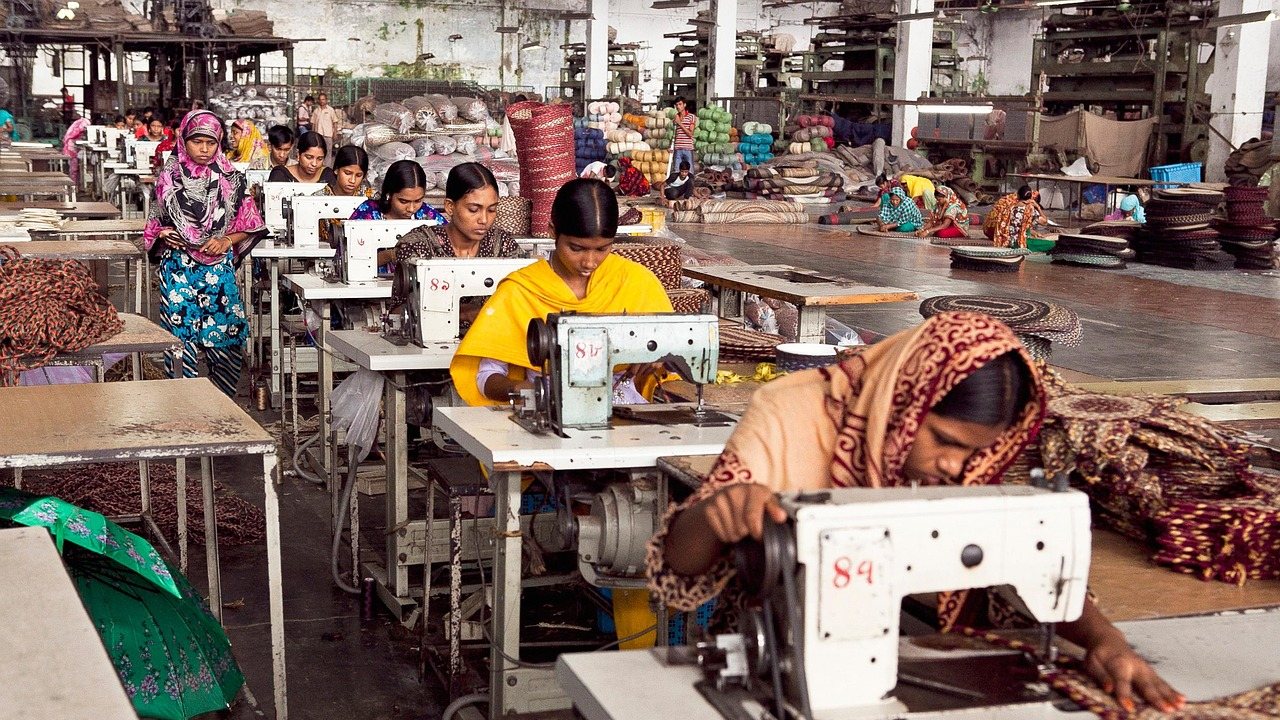
Vietnam, which had faced a punishing 46% IEEPA rate, now pays 12.5% under the forced-labor tariff — a reduction that restores its competitiveness as a low-cost apparel manufacturing hub. Bangladesh, the world's second-largest garment exporter, benefits from an even more dramatic drop, from 37% down to the 10% tier, reinforcing its position as the go-to source for fast fashion and basics.
Meanwhile, USMCA-qualifying apparel from Canada enters the U.S. at 0% duty and USMCA-qualifying apparel from Mexico also enters duty-free if it meets the yarn-forward rule of origin. For importers exploring nearshore options, both markets deserve fresh attention in 2026 sourcing reviews.
The Logistics Reality Behind the Recovery
Stable tariffs do not guarantee stable freight costs. Increased energy costs are hurting retailers' freight and transportation, and could "reignite pressure for companies to raise prices." Ocean volumes confirm this pressure is real: U.S. ports are on track to handle 2.31 million TEU in September 2026, up 9.6% from a year ago, which would make it the busiest import month of 2026. Transpacific lanes carrying holiday freight are still operating at near-peak capacity through at least October.
In 2026, peak congestion charges of $250–$500 per container apply at ports like Los Angeles and Long Beach during Q3–Q4. Apparel importers who secured capacity and rate agreements well in advance of the peak are weathering this environment better than those relying on spot markets.
When ocean rates spike, paying for the air in a half-empty container becomes a major liability. Most apparel importers move orders that do not completely fill a 40-foot container, resulting in unnecessary wasted spend. LCL consolidation — sharing container space and paying only for the cubic meters used — remains one of the most effective tools for apparel importers shipping partial loads from Asia or Central America.
Who Wins and Who Is Still at Risk
Reduced tariff levels and reimbursements have lowered expenses particularly for import-reliant apparel and footwear retailers including Nike and Gap, and large discounters and general merchandise stores including Walmart and Target. The off-price sector's "treasure hunt" appeal should offer significant growth opportunities as price-conscious consumers turn to retailers including TJX and Ross Stores, as well as dollar stores such as Dollar General.
The risk picture is more complex for companies that have not yet diversified their sourcing base or recovered their IEEPA duties. Inconsistent consumer demand, decelerating real wage gains, elevated borrowing costs, and geopolitical uncertainties each present risks capable of undoing the sector's fragile recovery. Recent regulatory changes U.S. retailers must track include updated de minimis thresholds, evolving forced-labor import bans under the Uyghur Forced Labor Prevention Act, and new country-of-origin marking requirements for textile and apparel. Compliance missteps in any of these areas can wipe out the margin gains tariff relief has restored.
How ASR Can Help
Navigating apparel imports in 2026 requires more than a good supplier relationship. From IEEPA refund coordination with licensed customs broker partners, to LCL consolidation from key Asian and Central American sourcing hubs, to documentation accuracy for UFLPA and country-of-origin requirements, the details of every shipment determine whether the tariff relief Moody's is celebrating actually reaches your bottom line.
ASR WorldWide Express (FMCSA MC# 1667345-B, DOT# 4286843, SCAC AZCB) is a Miami-based licensed freight forwarder with direct experience moving apparel and fashion goods across the U.S. trade lanes that matter most right now. Our team coordinates customs clearance through trusted licensed customs broker partners and can help you build the logistics strategy this new environment demands. Call us at +1 786 373 3003 or email shipping@asrwe.com to discuss your apparel import needs.
Important Disclaimer
This article is for informational purposes only and does not constitute legal, tax, or customs compliance advice. Tariff rates, refund eligibility windows, and trade policy are subject to change. Importers should consult a licensed customs broker and qualified legal counsel before making sourcing, classification, or duty-recovery decisions specific to their circumstances.