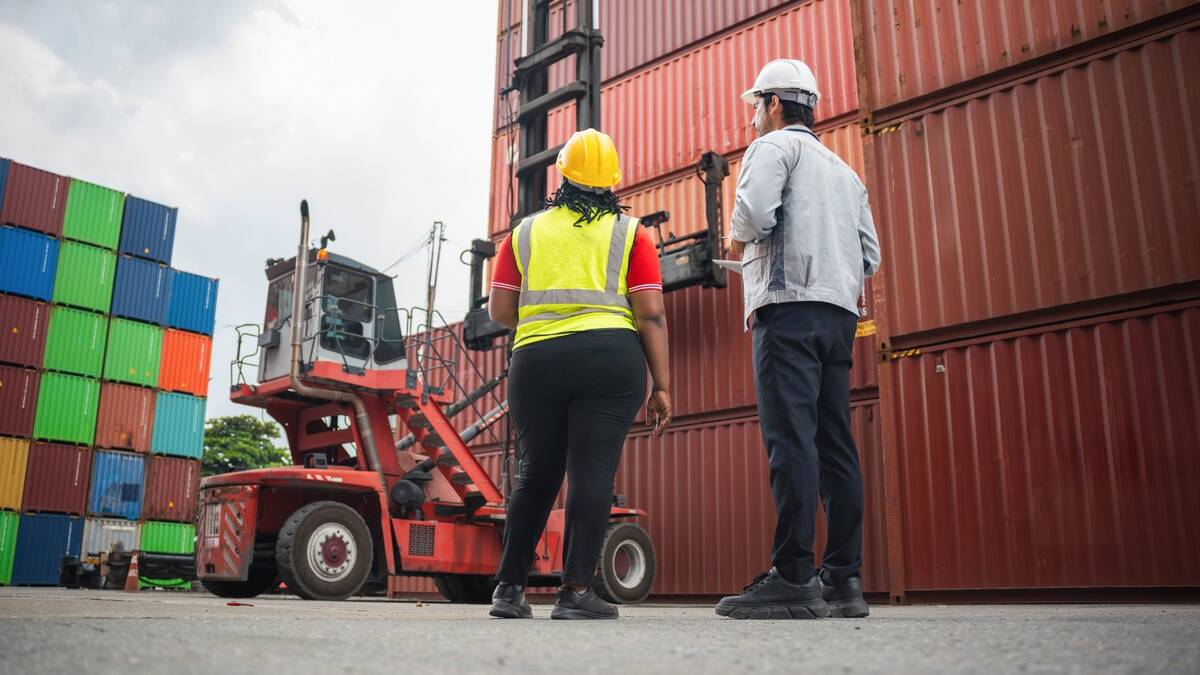
Overview of the customs clearance process
Every shipment entering the United States must be declared to US Customs and Border Protection and cleared through a formal or informal entry process. Customs clearance involves document submission, duty assessment, regulatory review by partner government agencies, and eventual release of your goods.
Understanding this process helps you avoid costly delays, penalties, and cargo holds.
Before your cargo arrives
ISF filing (ocean shipments)
For ocean freight shipments, the Importer Security Filing must be submitted at least 24 hours before the vessel departs from the foreign port. This filing contains 10 data elements from the importer and 2 from the carrier, which is why it is commonly called the 10+2 filing. Late or inaccurate ISF filings can result in penalties of $5,000 per violation and potential cargo holds.
Obtain an importer number
You need either an Employer Identification Number or a CBP-assigned importer number to clear goods through customs. If you are importing for the first time, you should register with CBP before your shipment arrives.
Secure a customs bond
A customs bond is a financial guarantee to CBP that all duties, taxes, and fees will be paid. You need either a single entry bond for occasional imports or a continuous bond for regular importing. A continuous bond covers all entries during a 12-month period and is required if you import more than three times per year.
The entry process
Step 1: entry filing
Within 15 calendar days of your cargo arriving at the US port, your customs broker files the entry with CBP. This includes the entry summary form (CBP Form 7501), commercial invoice, packing list, bill of lading or air waybill, and any certificates or permits required by partner government agencies.
Step 2: duty calculation
CBP assesses duties based on three factors. The classification of your product under the Harmonized Tariff Schedule determines the applicable duty rate. The customs value, typically the transaction value or price paid, determines the dutiable amount. The country of origin determines whether additional tariffs such as Section 301 or Section 122 apply.
Step 3: government agency review
Many products require clearance from agencies beyond CBP. The FDA reviews food, drugs, cosmetics, and medical devices. The USDA inspects agricultural products, meat, and plant materials. The CPSC reviews consumer products for safety compliance. The FCC checks electronic devices for radio frequency compliance. The EPA reviews vehicles, fuels, and certain chemicals.
Step 4: examination or release
CBP may select your shipment for examination based on risk targeting algorithms, random selection, or flags related to the importer, product type, or country of origin. Examinations can be document reviews, non-intrusive inspections using imaging technology, or intensive physical inspections that involve opening containers and physically inspecting cargo.
If no examination is required, your cargo is released, typically within 1 to 3 business days after entry filing.
Step 5: duty payment
Duties must be paid within 10 working days of entry. Your customs broker typically handles payment on your behalf and invoices you for the duty amount plus their fees.
Step 6: liquidation
Even after your goods are released, the entry remains open for review by CBP for up to one year. During this period, CBP can adjust the duty assessment if they determine errors in classification, valuation, or origin. This is called liquidation, and it represents the final accounting of duties owed.
Common reasons for customs delays
Incomplete or inaccurate documentation is the leading cause of delays. Missing or expired certificates from partner government agencies result in holds until the issue is resolved. Classification disputes can trigger additional review. UFLPA forced labor holds can delay shipments for weeks or months if CBP suspects goods were produced with forced labor.
Work with ASR customs clearance
Our licensed customs brokers handle the entire clearance process, from ISF filing to final delivery. We minimize delays through accurate documentation, proper classification, and proactive coordination with government agencies. Contact us at shipping@asrwe.com or +1 786 373 3003.