A $5.4 Billion Wake-Up Call for Global Shippers
On October 29, 2026, two of the world's largest energy companies delivered an unusually blunt message about the state of global freight markets. Shell disclosed that soaring tanker rates added $5.4 billion to its shipping lease costs in a single quarter. TotalEnergies reported that freight costs — once a rounding error at roughly $2 to $3 per barrel — had exploded to around $25 per barrel. Both numbers trace back to the same source: the Iran war and the chaos it has unleashed on the Strait of Hormuz. For US importers, this is not merely a story about oil company earnings. It is a leading indicator of where transportation costs, fuel surcharges, and supply chain expenses are heading across virtually every industry.
How the Hormuz Disruption Rewired Global Tanker Markets
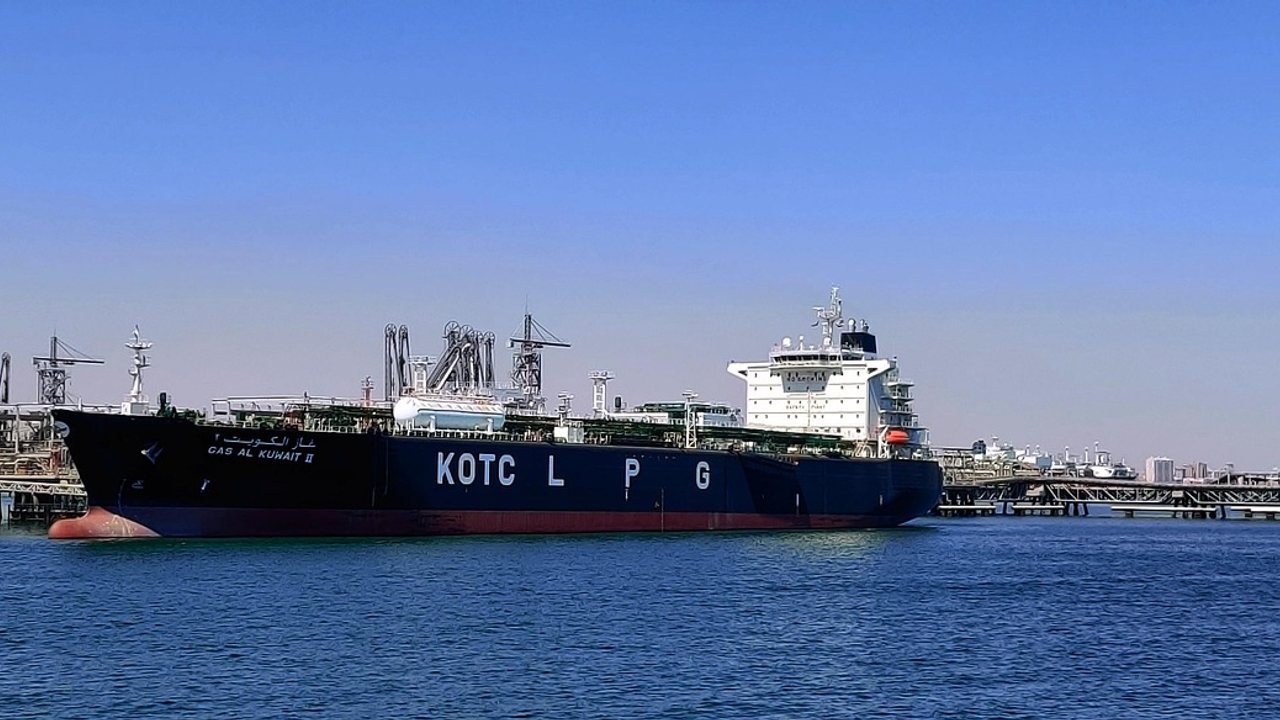
The Strait of Hormuz is the world's most critical oil chokepoint. Its two sea lanes facilitate the transit of roughly 20 million barrels of oil per day, representing approximately 20% of global seaborne oil trade, primarily from Saudi Arabia, the UAE, Iraq, and Qatar. Since the Iran war began, normal transit has been severely disrupted. Middle East producers have responded by routing crude through an elaborate system of shuttle tankers and ship-to-ship transfers in the Gulf of Oman, where cargoes are offloaded from smaller vessels onto VLCCs waiting safely outside the strait. This workaround keeps oil moving, but it is extraordinarily inefficient. A single large tanker can be tied up for days or weeks completing just one transfer, effectively removing it from the broader market.
The vessel shortage this creates has been dramatic. VLCC rates surged to an unprecedented $1.3 million per day in early October on the Middle East Gulf-to-Far East route — roughly 43 times the approximately $30,000 per day recorded in early January. Rates continued climbing, peaking at $1.4 million per day before pulling back somewhat by late October. Even after that retreat, the Baltic Exchange VLCC time-charter equivalent for Oman-to-China remained near $790,000 per day. Shell's CFO Sinead Gorman captured the scale directly, noting that the Middle East-to-China route was costing about ten times what it did just twelve months earlier.
What Shell and TotalEnergies Reported — and What It Signals
Shell's $5.4 billion figure refers specifically to shipping lease costs — long-term contracts for vessels to move hydrocarbons — and Shell emphasized that this is a non-cash accounting effect added to net debt rather than an immediate cash outflow. Still, the number is significant: cumulative increases in Shell's shipping leases through the first nine months of 2026 were $8 billion higher than the same period in 2025. Shell expects lease costs to normalise once Hormuz traffic recovers, but also warned that freight pressure is already feeding into weaker refining margins.
TotalEnergies presented a more direct operational hit. CEO Patrick Pouyanne disclosed that freight costs had risen from roughly $2 to $3 per barrel to around $25 per barrel, making shipping the primary driver of a $6 per barrel reduction in third-quarter liquids price realisation compared with the prior quarter. The company also noted that only about 25% of the normal LNG tanker flow was passing through the Strait of Hormuz by September and October, compared with pre-war levels. European refining margins, which incorporate freight costs alongside natural gas and CO2 costs, reached a historically high $33 per barrel on average over the quarter — 2.5 times higher than the prior quarter.
The picture that emerges is one where freight is no longer a minor cost input for energy majors. It has become a defining variable in profitability — and those cost structures eventually flow downstream.
The Diesel Link: Why US Truckers and Importers Feel This Directly
For US importers, the most immediate consequence of the tanker rate crisis is what it has done to diesel. Diesel fuel powers virtually all heavy-duty commercial freight trucks, rail freight, and agricultural equipment. The national average diesel price reached $6.352 a gallon for the week ending October 23, 2026 — the third-highest national average on record, up approximately 74% from around $3.63 a year earlier.
The diesel crack spread — the refinery margin on diesel versus crude — hit $84.74 per barrel against Brent and $94.21 against WTI on October 27. These elevated spreads reflect a structural shortage in middle distillate supply that does not ease quickly even if crude prices soften. As one freight industry analysis noted, shippers should avoid assuming that lower crude prices will immediately produce lower fuel surcharges or total transportation costs, because refiners and distributors must first work through inventory purchased at earlier prices.
At these fuel levels, freight surcharges compound across every mode. A supply chain professor cited by industry observers noted that moving a truckload of goods from one US region to another now costs approximately 40% more than it did a year ago, with a meaningful portion of that increase tied directly to diesel. For importers moving containers by drayage, LTL, or full truckload for final-mile delivery, these surcharges are not theoretical — they are showing up on invoices today.
Beyond Energy: How Tanker Tightness Spreads to All Cargo
The tanker market's structural disruption does not stay contained to oil cargoes. When a large portion of the global VLCC fleet is tied up in Gulf of Oman ship-to-ship operations, vessel availability tightens on routes entirely unrelated to Middle East crude. Record tanker rates have created a heavy crude glut in the Americas, pushing Canadian, Colombian, and Ecuadorian crude prices down roughly $10 per barrel because tankers that would normally carry those barrels are occupied elsewhere. The global diesel crunch has persisted as tanker shortages prevent heavy crude from reaching refineries where demand is strongest.
Insurance costs have also skyrocketed alongside freight rates. Energy market players have reportedly begun buying their own vessels rather than paying record charter rates, and the price of second-hand tankers has surged because new builds take two to three years to deliver. War-risk insurance premiums for vessels transiting anywhere near the Persian Gulf have added another layer to the cost of moving energy — and energy is an input in manufacturing, refrigeration, agriculture, and virtually every product that eventually crosses a US port.
The Household and Importer Cost Accumulation
The macroeconomic picture makes the freight shock even more consequential for US businesses. The Iran war is estimated to have cost American taxpayers $47.1 billion as of mid-October 2026, according to figures the Pentagon provided to Congress. Moody's Analytics estimated the conflict had cost the average American household $2,000 in additional expenses, with roughly $1,100 of that coming from higher energy costs. The CBO projected that war-related energy price pressures would push inflation up by approximately 0.5 percentage points by early next year. These macro forces are the backdrop against which importers are trying to manage their supply chain budgets.
For companies importing goods that depend on petroleum-derived inputs — plastics, chemicals, fertilizers, synthetic fibers — the cost pressures are multiplicative. Higher crude prices, higher freight costs, higher diesel surcharges, and higher war-risk insurance all compound simultaneously. Importers who locked in annual freight contracts at earlier rates may find themselves either renegotiating mid-term or absorbing costs their contracts did not anticipate.
Practical Steps US Importers Should Consider Now
The freight market environment of late 2026 demands active cost management rather than passive contract reliance. Importers should work closely with their freight forwarder to understand how fuel surcharge mechanisms are calculated across each mode and carrier, because the formulas vary significantly and some are updated weekly. Reviewing total landed cost models with updated diesel and ocean freight assumptions is essential — what was accurate six months ago may now substantially understate true import costs.
Diversifying routing options where possible can also help. Because the tanker capacity crunch is concentrated on Middle East-origin routes, importers sourcing from Southeast Asia, India, or the Americas may have access to more stable freight options. For energy-intensive commodities, reviewing whether supply agreements contain price adjustment clauses tied to freight or fuel indices is worth doing before renewal cycles. A licensed customs broker and freight forwarder team can help model these scenarios with current market data.
How ASR Can Help
At ASR WorldWide Express, we monitor freight market conditions in real time so our clients do not have to navigate these disruptions alone. Whether you are managing ocean freight from Asia, coordinating drayage with escalating fuel surcharges, or rethinking your routing strategy in light of record tanker rates, our team provides end-to-end freight forwarding expertise — and works alongside licensed customs broker partners to ensure compliant, efficient clearance at US ports. Call us at +1 786 373 3003 or email shipping@asrwe.com to discuss how current market conditions affect your specific import program.
Important Disclaimer
This article is provided for informational purposes only and does not constitute legal, financial, or customs advice. Tariff classifications, freight market conditions, and regulatory requirements change frequently. Importers should consult a licensed customs broker and qualified advisors before making sourcing, routing, or duty planning decisions based on any information in this article.