The Silent Surge Reshaping Commercial Freight
A warning published on October 6, 2026, by global transport insurer TT Club landed with unusual force inside the freight community: rising volumes of military cargo — weapons, munitions, missiles, propellants, and component parts — are moving through the same commercial freight forwarders, road hauliers, port operators, and shipping lines that handle everyday commercial goods. The consequences for anyone operating in that supply chain, including importers and exporters who never touch a single defence contract, are real and growing. Understanding where the risk lives, and how to protect your operation, has never been more urgent.
Why Military Volumes Are Rising So Fast
The numbers behind this trend are striking. Global defence spending is expected to top $2.6 trillion in 2026, an 8.1 percent increase over 2025. Much of that growth is being driven by NATO allies accelerating commitments made after Russia's full-scale invasion of Ukraine. Real growth in NATO defence spending surged to 12.9 percent in 2024 and 12.3 percent in 2025, and collective spending is still set to increase by almost 10 percent in 2026. Total spending by European NATO members is currently expected to reach around $639 billion in 2026, with well over a third allocated to procurement and research and development.
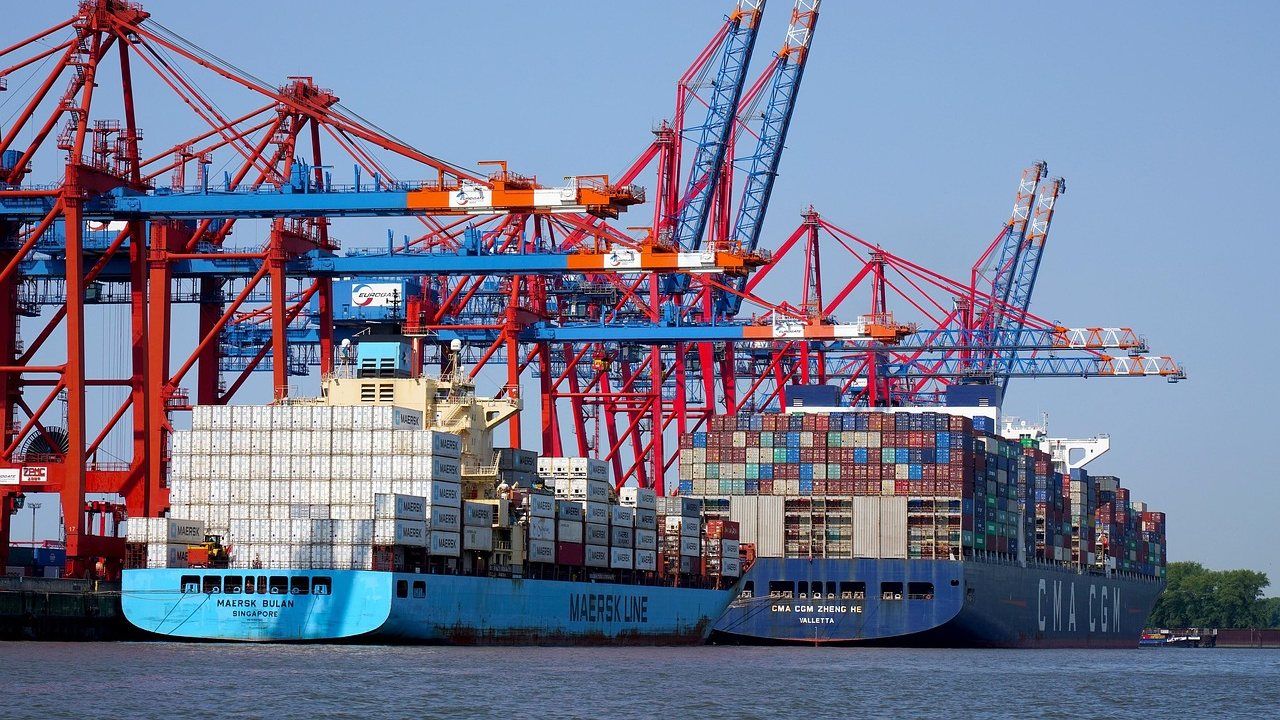
That procurement spending has a direct physical consequence. With defence budgets increasing in many countries, the volume of military cargo moving through commercial supply chains is also growing. While some shipments are handled directly by military organisations, much of the movement takes place under commercial contracts involving freight forwarders, road hauliers, port operators, and shipping lines. In short, the weapons and munitions that governments are ordering in record quantities must move somehow — and they increasingly move through the same networks that carry your goods.
What Makes Military Cargo Uniquely Dangerous
Military logistics is a continual feature of global supply chains, not simply a function of large-scale mobilisation during conflict. Weapons systems, munitions, missiles, propellants, grenades, and component parts move between manufacturers, storage facilities, ports, and end users worldwide, including in peacetime.
The technical classification of this freight is where the complexity begins. Military cargoes often fall within Class 1 dangerous goods, covering explosives and related articles. The risks vary significantly depending on the classification. At one end of the spectrum are Class 1.1 products, which present a mass explosion hazard capable of causing catastrophic destruction. Other cargoes may include mortars, grenades, and propellants, each carrying their own unique handling requirements.
Classification can have significant consequences for transport costs, routing options, and regulatory obligations. The consequences of misdeclaration are severe, and military shippers are generally subject to rigorous oversight, extensive testing procedures, and elevated due-diligence standards. A single misdeclared shipment can halt operations at a port, trigger regulatory investigations across every carrier in the chain, and expose a freight forwarder to liability that reaches far beyond the value of the cargo itself.
The Regulatory Maze Every Carrier Must Navigate
Each movement must navigate dangerous-goods regulations, export, transit, and import licences, trade-control requirements, and in some cases political approvals. Security provisions can go far beyond those normally associated with commercial freight. They may include continuous surveillance and attendance, security-cleared personnel, signature controls, detailed tally records, and chain-of-custody documentation.
Most military cargo moves by sea and road, with air transport generally reserved for operational or urgent requirements. For substantial volumes, chartering an entire ship can be more practical than using liner services, and may offer flexibility to use remote ports with higher explosives limits. Even when a commercial carrier takes on just one segment of the movement, all of these obligations travel with the cargo.
On the road side, the regulatory environment has tightened further. 2026 is proving to be a turning point for road freight transport in Europe, driven by new ADR regulations that introduce greater requirements for the transport of dangerous goods, together with more homogeneous controls at European level and an extension of responsibilities throughout the supply chain. Full implementation of the new dangerous goods rules took effect by June 24, 2026, with Delegated Directive EU 2025/1801 introducing a unified checklist, a new risk classification for violations, and extended responsibility to the entire logistics chain — from shippers to tank operators and recipients.
How Mobilisation Creates Congestion for Commercial Shippers
Perhaps the most underappreciated risk for ordinary importers and exporters is what happens at the network level when military cargo surges. During periods of mobilisation, peak cargo volumes can cause congestion across ports and hinterland networks, while specialist resources such as ADR-qualified drivers can become scarce. When those drivers are absorbed into military logistics pipelines, commercial dangerous-goods movements — including industrial chemicals, lithium batteries, and aerosols — compete for a shrinking pool of certified operators.
Europe's driver market is already strained. The International Road Transport Union estimates that Europe now faces a shortage of approximately 600,000 truck drivers — a figure that has grown steadily over the past decade and shows no signs of reversing. Qualified drivers — particularly those holding CE licences with ADR or temperature-controlled certifications — are in a position of strength, with companies competing to attract and retain them. Any further absorption of ADR-certified capacity by military logistics compounds delays and costs for commercial shippers.
Port storage poses a parallel problem. Explosive limits, limited port storage, shortages of ADR-qualified drivers, and congestion during mobilisation can disrupt movements. Even a terminal that never handles a single military consignment can find its normal container flow disrupted by the security cordons, dwell-time extensions, and priority access agreements that accompany military cargo throughput.
What This Means for Freight Forwarders and Their Clients
Rising volumes of military cargo moving through freight forwarders, road haulers, port operators, and shipping lines are creating complex safety, security, regulatory, and political risks across commercial supply chains, according to TT Club. Mike Yarwood, TT Club's managing director for loss prevention, said a failure at any point in the supply chain can trigger severe safety, legal, and commercial consequences.
For importers and exporters, the practical exposure runs in several directions. First, if your freight forwarder or carrier takes on a military contract without fully segregated operations, the liability exposure and security obligations of that contract can bleed into service capacity available to commercial clients — producing delays, rate spikes, and capacity withdrawals with little advance notice. Second, a serious incident involving a co-loaded or adjacent military shipment can strand your cargo at a port indefinitely while authorities investigate. Third, if your goods are misidentified or co-mingled with military cargo, you may face licence checks and trade-control scrutiny you were never expecting.
TT Club stresses advance planning and coordination between shippers, carriers, ports, authorities, and insurers to manage safety, compliance, and insurance risks. For commercial shippers, that translates into asking harder questions of every logistics partner about what else is moving through their network.
Key Questions to Ask Your Freight Partner
The right questions to ask before committing a shipment to any carrier in a region with elevated military activity are straightforward but rarely asked. Does your forwarder or haulier have a clear policy on accepting Class 1 dangerous goods? Are their security-cleared personnel and ADR-certified drivers in a separate staffing pool from their commercial operations? What insurance arrangements cover co-mingled or adjacent cargo? What contingency exists if your goods are detained during a military cargo incident at a shared terminal? These are not hypothetical concerns — they are active operational risks in today's freight environment.
This creates a highly specialised logistics environment where safety, security, regulatory compliance, and political considerations must all align. Importers whose supply chains route through European ports, Eastern Mediterranean hubs, or any facility used for military throughput have the most immediate exposure, but the network effects of mobilisation can reach much further into global trade lanes than any map of active conflict zones would suggest.
How ASR Can Help
At ASR WorldWide Express, we coordinate every shipment through a network of trusted, licensed partners who maintain clear operational boundaries between regulated defence cargo and standard commercial freight. Whether your goods move by ocean, air, or cross-border truck, our team vets the carriers, monitors capacity conditions in active corridors, and ensures your customs clearance — handled through our licensed customs broker partners — stays insulated from the disruptions that are cascading through military-adjacent lanes right now.
If you are seeing unexplained delays, capacity withdrawals, or rate volatility on routes that normally run cleanly, it is worth having a conversation about what else is moving through your network. Call us at +1 786 373 3003 or email shipping@asrwe.com to review your current routing and risk exposure with our team.
Important Disclaimer
This article is intended for general informational purposes only and does not constitute legal, regulatory, or compliance advice. Rules governing the movement of military cargo, dangerous goods classifications, export licences, and trade controls vary by country and change frequently. Consult your licensed customs broker, legal counsel, and relevant national authorities before making any decisions regarding the handling, routing, or documentation of regulated cargo.