The Dashboard Era Is Ending
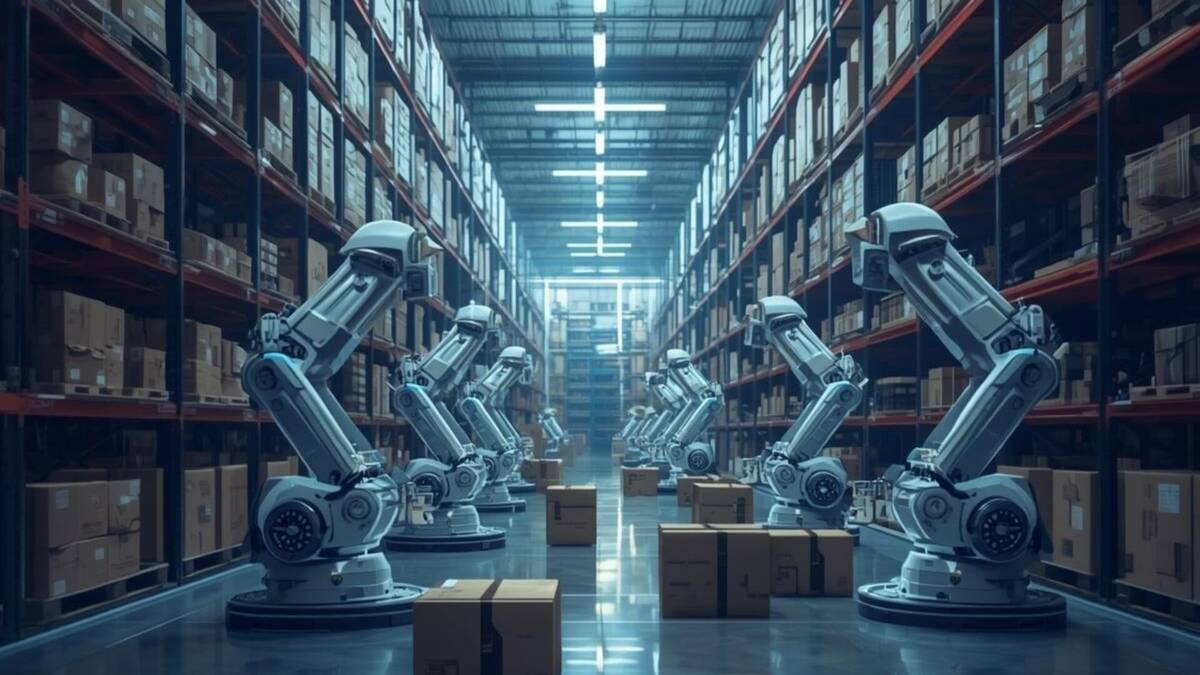
For decades, supply chain software meant dashboards, clicks, and planners manually translating data into decisions. That model is being retired at speed. In August 2026, Blue Yonder — one of the world's largest supply chain software providers — made headlines when executives described a fundamental redesign of how work gets done: AI agents are replacing the apps, and humans are moving from operators to supervisors. This is not a distant roadmap item. It is happening now, and every importer, exporter, and logistics operator running a modern freight program needs to understand what is changing and why it matters to their bottom line.
What Agentic AI Actually Means
A class of AI systems is emerging that introduces a virtual workforce of agents that move beyond insights to execution, capable of planning, acting and adapting to achieve goals in complex environments. That is Gartner's definition, and it is the cleanest way to draw the line between old and new. The older generation of supply chain AI delivered a recommendation on screen and waited for a human to act. Agentic AI closes that loop entirely.
Over the past year, the role of AI has evolved from recommendation engines to operational agents capable of acting directly within systems. These agents follow a continuous loop of sensing events, analyzing conditions, deciding on actions, and executing changes, allowing them to manage workflows across warehousing, transportation, and planning without constant human intervention.
In 2026, AI in the supply chain is moving from proof-of-concept experiments to embedded, agentic capabilities that sit inside core business processes. Instead of only delivering dashboards and recommendations, AI agents identify risks and opportunities, propose workarounds, onboard suppliers, and even trigger corrective actions automatically within trusted guardrails.
The Blue Yonder Moment That Triggered This Conversation
The headline that sparked fresh debate this week came from an August 28, 2026 interview published by SiliconANGLE, in which Blue Yonder's chief design officer Nunzio Esposito laid out the company's design philosophy in plain terms. Interfaces built for planners clicking through dashboards do not translate to a world where agents act and humans supervise. Blue Yonder has pushed that thinking into a design manifesto it calls frictionless outcomes, favoring commands over clicks and stripping out steps the system no longer needs a person to confirm.
The user is no longer the primary operator of systems; instead, the user becomes a supervisor of an intelligent, continuously optimizing network. This shift is reinforced by the introduction of the Blue Yonder Orchestrator, which acts as the coordination layer for these agents. Rather than a single AI model or application, the Orchestrator manages a system of agents, models, and workflows, enabling them to operate cohesively across the supply chain.
Earlier this year, Blue Yonder deepened this architecture with a Model Training Factory built in partnership with Nvidia. Enterprises are moving from AI assistants to teams of specialized agents that can perceive, reason, use tools and act alongside human operators at machine speed. The Model Training Factory is a repeatable system for fine-tuning and testing highly specialized supply chain models. Trained to consistently perform high-value tasks at the level of supply chain subject matter experts, these models are fine-tuned and built to execute complex, multi-step supply chain workflows, working alongside human operators and then graded to ensure high-quality outcomes.
The Scale of the Shift: What the Numbers Say
This is not a niche experiment. The investment forecasts behind agentic AI in supply chain are among the most aggressive in enterprise software history.
Supply chain management software with agentic AI capabilities will grow from less than $2 billion in 2025 to $53 billion in spend by 2030, according to Gartner. That trajectory reflects a market moving from curiosity to core infrastructure in under five years.
Gartner predicts that by 2030, 60% of enterprises using SCM software will have adopted agentic AI features, up from 5% in 2025, as businesses move from planning to deploying agentic AI within supply chain workflows.
Advances in AI technologies are enabling chief supply chain officers to drive business value, strengthen resilience, and reimagine operating models. Gartner said the trends fall under three themes: autonomy and agency, specialization and intelligence, and trust and governance.
At the same time, confidence among supply chain leaders is notably mixed. Blue Yonder's Supply Chain Compass report pointed to a more cautious view among supply chain leaders than a year earlier. According to the findings, 66% of leaders said they believe they are ready for the future, down from 73% in the previous report. Improving efficiency and productivity ranked as the top strategic priority for 2026, selected by 35% of respondents. The gap between ambition and readiness is exactly where early movers gain ground.
What Is Actually Being Automated Right Now
When supply chain leaders talk about agentic AI today, five operational domains keep surfacing. Blue Yonder's current AI agents include an Inventory Ops Agent, Shelf Ops Agent, Logistics Ops Agent, Warehouse Ops Agent, and Network Ops Agent, with a Tariffs Agent in development. That last entry is pointed: as tariff volatility dominates trade headlines in 2026, software vendors are already building agents specifically designed to monitor duty changes and adjust sourcing decisions in near real time.
Updates include AI agents for retail planning, fulfillment and sourcing, manufacturing planning, and transportation management. New mobile apps support allocation, replenishment, warehouse operations, and customer service.
What that means in practice is that if a problem arises — say, there are allocation shorts in the warehouse — an AI agent can prioritize what needs to be done and take autonomous action. Exception handling, which currently consumes enormous hours of planner time, becomes a machine-speed function.
The augmented connected workforce concept is gaining traction, where AI agents handle data reconciliation, exception management, and routine decision-making, effectively cloning senior planners' expertise. This allows shrinking workforces to manage expanding complexity.
The Change Management Problem Nobody Talks About Enough
The technology is moving faster than the organizations adopting it. A Gartner survey from May 2026 found 17% of supply chain organizations pursuing transformational AI redesign, while 83% are applying it to specific use cases or scaling gradually. Broad use is real; wholesale reinvention is rare.
The operating tension at industry events in 2026 is autonomy versus organizational readiness. Software providers are presenting a future where specialized agents can help run supply chain workflows at machine speed, but customer stories keep returning to data discipline, process change, and cultural readiness.
Gartner analysts have been direct: AI is not a plug-and-play replacement for people. Organizations that stop hiring and fail to develop early-career professionals will soon face talent pipeline gaps, employee dissatisfaction, and elevated hiring pay premiums, especially for AI-native talent. The most impactful results from AI will not be from headcount reduction, but rather the enablement of human-AI collaboration.
By early 2026, 55% of supply chain leaders expected agentic AI to reduce entry-level hiring and 51% expected overall workforce reductions. At the same time, demand for senior AI-skilled supply chain roles rose 387% since 2023, so the change looks more like a shift toward higher-skilled roles than a simple reduction.
For importers and exporters evaluating these tools, it is essential to determine and deploy appropriate levels of human-in-the-loop for supply chain management decisions, particularly during the early stages of AI-driven SCM software deployment. Governance and auditability are not optional extras — they are the foundation of safe adoption.
What This Means for Importers and Freight Operations
The agentic AI wave hits freight operations in ways that are immediately practical. Demand forecasting agents can compress replenishment lead times. Transportation management agents can reroute shipments around port congestion without waiting for a planner to log in. Exception agents can flag a shipment likely to trigger a customs hold and initiate corrective documentation before the vessel arrives.
Agentic AI acts on its own: monitoring capacity, flagging coverage risks, and managing exceptions without waiting for a human to initiate. For importers running tight inventory cycles, that capability shift is material. It means that a missed booking or a carrier capacity gap that previously sat unnoticed until a planner's morning review can be caught and resolved at 2 a.m.
Logistics in 2026 is defined by one overriding shift: the collapse of the gap between insight and action. Supply chain and logistics trends in 2026 are focused on how competitive advantage comes from how quickly organizations can act on disruption. Importers who are still routing every exception through email threads and weekly calls will find themselves structurally slower than competitors using supervised agent workflows.
The practical implication is not that every importer needs to buy a new TMS or SCM platform immediately. It is that when evaluating freight forwarder partners, technology providers, and internal tools, agentic AI capabilities should now be on the evaluation checklist alongside traditional criteria like rate competitiveness and network coverage.
How ASR Can Help
At ASR WorldWide Express, we follow the evolution of supply chain technology closely because it directly shapes how we coordinate shipments, manage documentation, and communicate exceptions to our clients. Whether you are moving ocean freight, air cargo, or cross-border truck shipments into or out of Miami, our team works with licensed customs broker partners and monitors freight conditions in real time to keep your supply chain moving. We are not a software vendor — but we understand how these tools interact with the physical reality of a shipment, and we help clients translate emerging capabilities into operational plans that actually work.
If you want to talk through how agentic AI trends affect your import or export program, or if you simply need a reliable freight forwarding partner with a track record in complex shipments, reach out to our Miami team directly.
Phone: +1 786 373 3003
Email: shipping@asrwe.com
Important Disclaimer
This article is intended for informational purposes only and does not constitute legal, regulatory, or technology investment advice. Supply chain AI capabilities, vendor offerings, and market forecasts evolve rapidly. Importers and exporters should consult qualified technology advisors, legal counsel, and licensed customs professionals before making decisions about software adoption, workflow changes, or compliance obligations related to automated supply chain systems.