A Dormant Law From the Great Depression Is Now Reshaping North American Trade
On July 20, 2026, the trade world woke up to a move that no one had seen in roughly 80 years. President Trump exercised his authority under Section 338 of the Tariff Act of 1930 to impose additional 50 percent tariffs on Canada to offset Canada's discriminatory treatment of U.S. exports. The obscure tariff-setting authority had "gone unused for decades," and trade lawyers at Covington and Burling found no public record relating to Section 338 since 1949. The announcement lands at the worst possible moment for supply chain planning: it coincides with the expiration of the Section 122 global surcharge on July 24, signals of incoming Section 301 tariffs on dozens more countries, and genuine uncertainty about what the post-July 24 tariff map will look like. Every importer and exporter moving goods across the U.S.-Canada border needs to understand exactly what was signed, what it covers, and what comes next.
What Section 338 Actually Does
Section 338 of the Tariff Act of 1930 empowers the President to, among other things, impose duties of up to 50 percent on imports of a foreign country to offset the burden or disadvantage from a foreign country's unequal imposition on or discrimination against the commerce of the United States. The 50 percent rate is the highest the president can impose under Section 338. The law is a relic of the Smoot-Hawley era, best remembered for deepening the Great Depression, but it has survived on the books and now provides the administration with a legal tool that the courts have not yet evaluated in a modern context.
Trump invoked Section 338 of the Tariff Act of 1930, the first recorded use of the law in nearly a century of its existence. The law permits the president to impose punitive tariffs of up to 50 percent against trading partners deemed to have discriminated against U.S. goods. Crucially, because Section 338 rests on a different statutory foundation than the IEEPA tariffs struck down by the Supreme Court in February 2026, the administration believes it stands on firmer legal ground — though that has not yet been tested in court.
What the Three Proclamations Cover
President Trump signed three proclamations targeting different sets of Canadian imports with the steep tariffs in response to separate areas — motor vehicles, alcohol and dairy — where the U.S. says it has been treated unfairly.
Each Section 338 proclamation imposes a 50 percent tariff on a different set of Canadian imports, covering products ranging from wine to hockey sticks to cement. The new tariffs would also apply to dairy products, swimming pools, furniture, fishing rods, seeds, clothing and wigs, among other items. The tariffs also cover construction materials, clothing, furniture and technology, among other things.
These Section 338 tariffs apply to all covered goods regardless of whether a good originates under the U.S.-Mexico-Canada Agreement (USMCA). These Section 338 tariffs will not apply to energy, potash, products subject to tariffs under Section 232, and certain other goods, such as fish or critical minerals. That USMCA carve-out is especially significant. Most prior tariff actions had exempted USMCA-qualifying goods — meaning a large share of Canadian exports entered duty-free. The new proclamations remove that protection for covered products.
The U.S. Trade Representative's office said that the tariffs would apply to nearly $20 billion of imports from Canada — about 5.2 percent of the $382 billion worth of goods that the U.S. imported from Canada in 2025. While that is a defined slice of the total trade relationship, it still represents an enormous volume of freight moving through ports of entry in the Great Lakes region, the Pacific Northwest, and other cross-border corridors.
Why the White House Says It Acted
The administration pointed to three specific areas of what it calls Canadian discrimination. "Canada has taken U.S. alcohol products off Canadian shelves, given better market access to dairy products from the European Union, and has put a cap on U.S. vehicle exports to Canada from companies reshoring to the United States," U.S. Trade Representative Jamieson Greer charged in a statement.
From April 2025 through March 2026, Canadian imports of U.S. motor vehicles decreased by approximately 22 percent, or $5.6 billion, compared to the same period in 2024-2025. The White House treats that decline as evidence of discriminatory enforcement rather than market forces, and the three proclamations are structured as direct offsets to that alleged disadvantage.
The White House, in announcing the new tariffs, said Canada was one of only two countries — along with China — to retaliate against Trump's tariffs last year. That framing matters for importers because it signals the administration views Canada differently from trading partners that have entered formal negotiations, making a quick suspension of these tariffs less likely.
Canada's Response and the Negotiating Window
Responding to the announcement, Canadian Prime Minister Mark Carney said that the tariffs were a "direct violation" of the USMCA, and added that his country was "ready to intensify discussions" to resolve disputes with the U.S.
The Canadian Chamber of Commerce called the tariffs a "regrettable escalation" and urged both countries to use the month before they take effect to advance negotiations. The White House said in a fact sheet that the tariffs would go into effect in 30 days, meaning there is time for negotiations, as Trump has not always followed through on his announced tax hikes on imports.
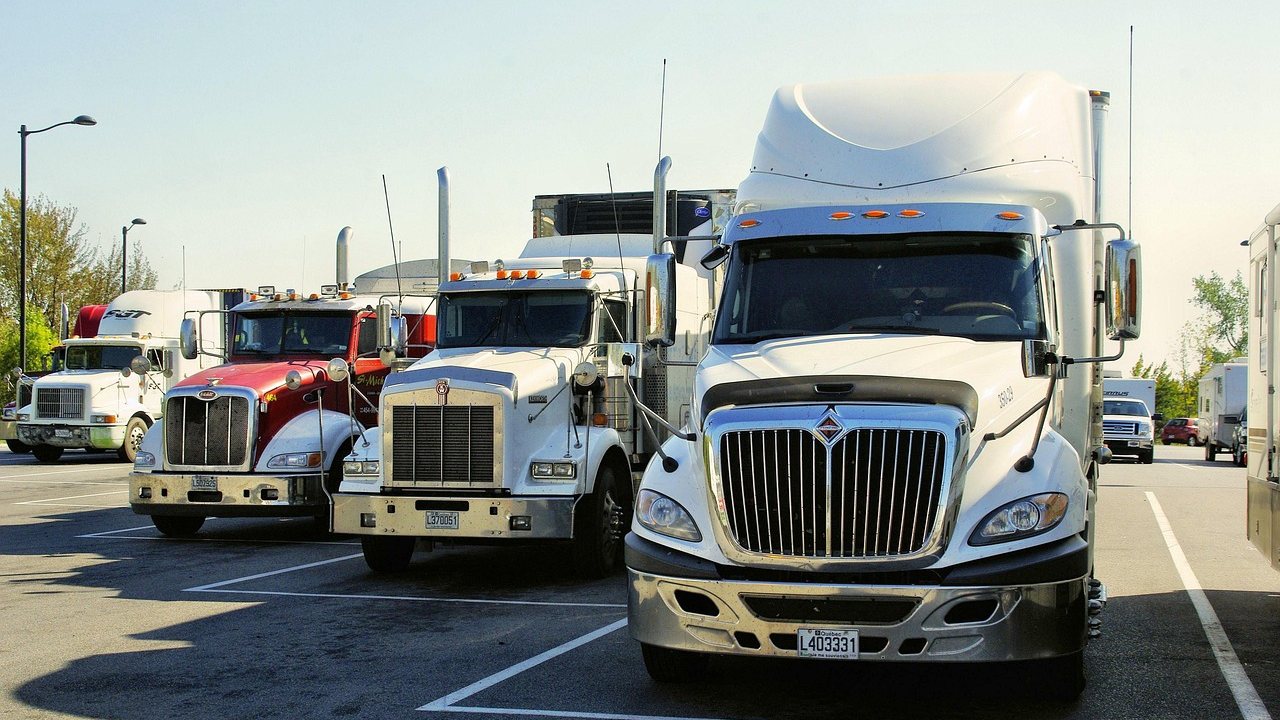
The freight industry is not waiting. "You cannot disrupt the world's most integrated supply chain without massive collateral damage," said Canadian Trucking Alliance CEO Stephen Laskowski. "These tariffs will immediately spike freight costs, create severe border bottlenecks, and hurt consumers in both nations." Cross-border carriers, customs brokers, and drayage operators moving goods between Ontario, Quebec, and U.S. distribution centers are already being asked to model the cost impact.
The Section 122 Expiration Adds Another Layer of Urgency
The Canada tariff announcement does not exist in isolation. Just three days from now, on July 24, 2026, the broader global tariff picture shifts again. The Section 122 tariff expires by statute at 12:01 a.m. EDT on July 24, 2026, 150 days after it took effect on February 24 — the maximum duration Congress allows without an extension.
The average effective U.S. tariff rate could fall from roughly 13.0 percent to roughly 7.2 percent when Section 122 lapses, according to trade-weighted estimates. However, that drop may be short-lived. U.S. Trade Representative Jamieson Greer signaled another round of President Trump's tariffs is on the way, telling CNBC's "Squawk Box," "We expect to see some action soon." Greer said that the proposed Section 301 tariffs on 60 countries would cover "about 99% of our trade," adding: "That actually illustrates the scale of the problem we're facing."
USTR has proposed Section 301 forced-labor duties of 10 percent and 12.5 percent covering most major U.S. sourcing countries. Unlike Section 122, which is capped by statute at 15 percent and roughly 150 days, Section 301 duties carry no expiration date and no rate cap. For importers, that is a critical distinction: the replacement duties, if finalized, will not have a built-in sunset.
What This Means for Your Import Program
For companies sourcing from Canada, the 30-day window before the Section 338 tariffs take effect is the time to act. There are several operational questions that every trade compliance team should be reviewing immediately.
Audit Your Canadian product mix
Determine which of your Canadian imports fall within the three proclamation categories — motor vehicle-related goods, alcohol and related products, and dairy-linked categories — versus those that may qualify for the energy, critical mineral, or existing Section 232 exemptions. The product scope is wide-ranging, covering everything from wine and cement to furniture and textiles, so a thorough HTS-level review is essential.
Assess your USMCA reliance
If your supply chain was built around USMCA duty-free treatment for Canadian-origin goods, that protection no longer applies to products covered by the new proclamations. Work with your customs broker to identify which entries will now carry an additional 50 percent duty layer and recalculate total landed cost accordingly.
Model the July 24 Section 122 transition
Entry timing is everything: duty rates are set by the date of entry, not the ship date. Goods already on the water can land in the gap if entries are timed after the Section 122 lapse; goods rushed to enter before July 24 lock in the 10 percent. This is a narrow but real landed-cost optimization opportunity that your broker can help you evaluate legally.
Watch for Section 301 finalization
The most likely scenario is that USTR will finalize its Section 301 tariffs related to alleged forced labor practices within the coming days and implement them from July 24 to prevent a gap in U.S. tariff coverage. Importers sourcing from Vietnam, India, Thailand, South Korea, and other affected countries should be modeling both the post-July 24 Section 301 scenario and the brief window if there is any gap between Section 122's expiration and Section 301's implementation.
How ASR Can Help
The convergence of new Section 338 tariffs on Canada, the Section 122 expiration on July 24, and incoming Section 301 duties on dozens of countries represents one of the most complex tariff transitions U.S. importers have faced in a generation. ASR WorldWide Express coordinates end-to-end freight forwarding and works closely with licensed customs broker partners to help importers navigate exactly this kind of rapidly evolving compliance landscape. Whether you are re-routing Canadian supply chains, auditing HTS classifications ahead of new duty rates, or planning entry timing around the July 24 deadline, our team is available now.
Call us at +1 786 373 3003 or email shipping@asrwe.com to speak with a freight specialist today.
Important Disclaimer
This article is provided for informational purposes only and does not constitute legal, tax, or customs advice. Tariff rules, rates, exemptions, and legal interpretations are subject to change rapidly and may be affected by ongoing litigation. Importers and exporters should consult a licensed customs broker and qualified trade counsel to assess how current or forthcoming tariff measures apply to their specific products and supply chains.