The World's Supply Chain Map Is Being Redrawn
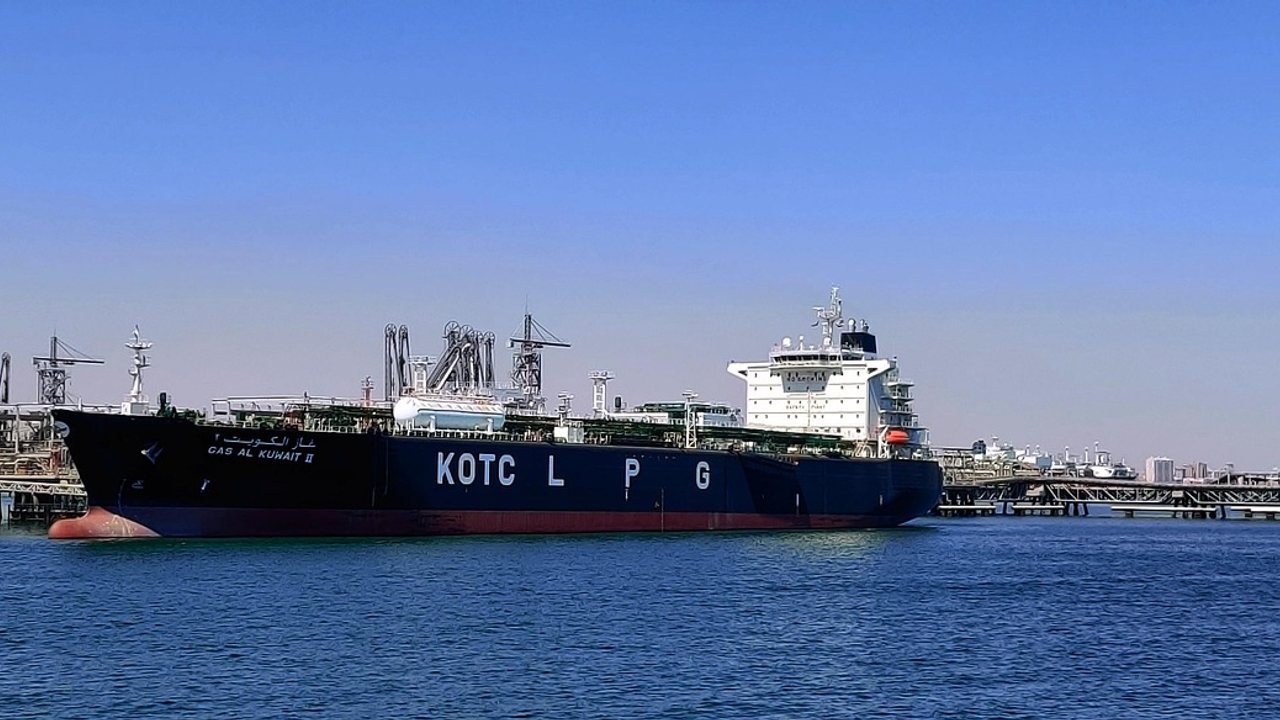
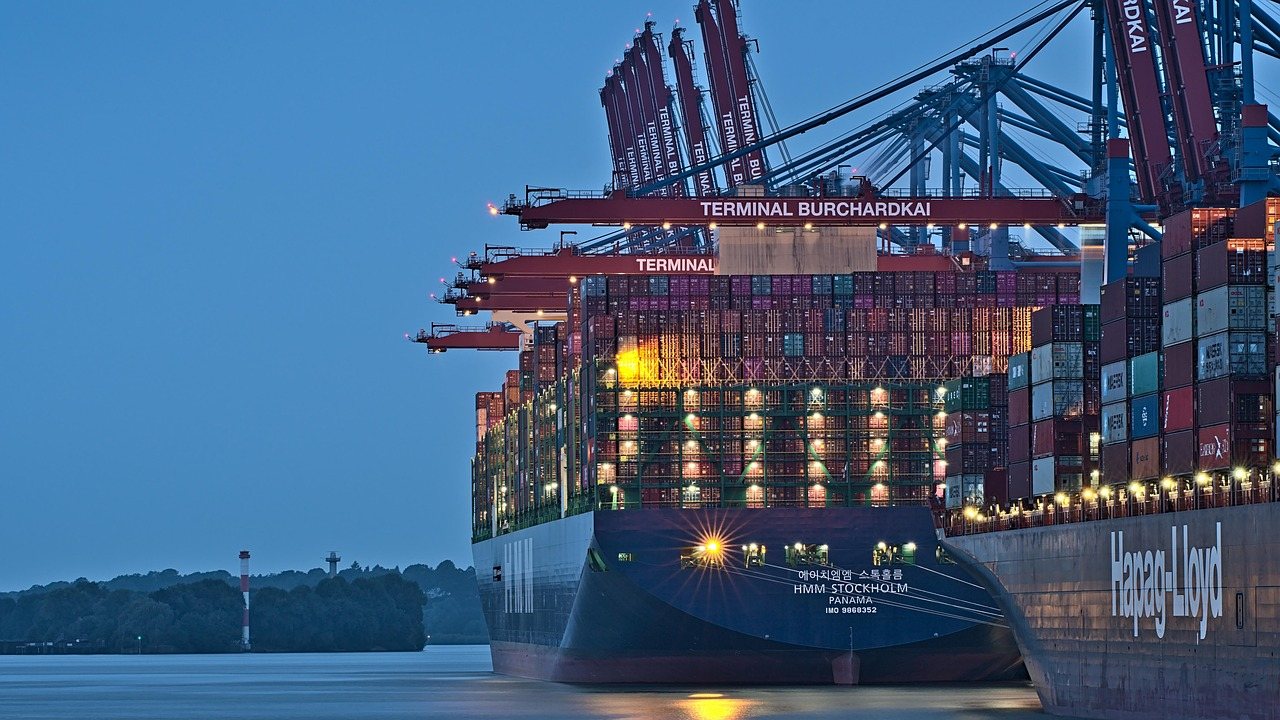
For decades, the dominant mental model of global freight ran in a straight line: Asian factories to ocean carriers to US ports. That map is being torn up. Geopolitical shocks — Red Sea disruptions, Hormuz tensions, and the accelerating fragmentation of US-China trade — have forced every serious supply chain strategist to ask the same question: where is the safe, scalable middle ground between East and West? The answer, with increasing momentum and billions of dollars of committed capital behind it, is the Middle East. The Gulf Cooperation Council economies, led by the UAE and Saudi Arabia, are executing one of the most ambitious logistics transformations in modern trade history, and what happens there has direct, practical consequences for US importers shipping between Asia, Europe, and the Americas.
From Oil Exporter to Logistics Superpower
The scale of investment underway is staggering. More than $110 billion in combined logistics investment by the UAE and Saudi Arabia is accelerating demand for project cargo and heavy-lift services across the region. Saudi Arabia's ambitions go even further: the Kingdom's National Transport and Logistics Strategy allocates approximately $133 billion to enhance multi-modal freight transport capabilities by 2030. The goal is explicit. Saudi Arabia's National Transport and Logistics Strategy targets global top-10 logistics hub status by 2030, anchoring transport investment directly to industrial diversification and non-oil GDP growth. On the maritime side, the results are already visible: Saudi Arabia's port network handled a record 8.3 million containers in 2025. Saudi Railways is advancing rapidly as well, with Saudi Arabia Railways launching five new freight logistics corridors spanning 2,500 kilometres, directly connecting Jeddah Islamic Port and King Abdulaziz Port in Dammam to inland dry ports — allowing logistics operators to migrate cargo from long-haul trucks to rail.
The UAE is moving with equal urgency. Fresh infrastructure projects and cross-border connections across Sharjah, Abu Dhabi, Dubai, and Fujairah are boosting cargo throughput, with the nation's non-oil external trade hitting an unprecedented AED 1.937 trillion ($527.3 billion) in the opening six months of 2026. Dubai's physical infrastructure is being knitted into a coherent multimodal system. The Dubai Logistics Corridor links sea freight at Jebel Ali Port with air freight at Al Maktoum International Airport, facilitating movement between maritime and aviation systems. Meanwhile, Etihad Rail moved roughly 1.8 million tonnes of sulphur, more than four million tonnes of aggregates, and 129,000 containers in 2026, with operations covering 11 terminals linking key industrial centres and ports.
Air Cargo: Gulf Carriers Fill the Capacity Gap
The transformation is not limited to sea and rail. Gulf airlines have expanded both bellyhold and dedicated freighter capacity, supporting strong cargo flows through hubs such as Dubai, Doha, Abu Dhabi, and Riyadh, with regional air cargo capacity growing faster than global averages by late 2025 — reinforcing the Middle East's role as a transit hub linking Asia, Europe, and Africa. Major carriers including Emirates SkyCargo, Qatar Airways Cargo, and Saudia Cargo have invested in fleet expansion and cargo terminal upgrades, improving handling capabilities for pharmaceuticals, perishables, and express freight. For US importers moving time-sensitive goods, the Gulf hub model increasingly offers a genuine air freight alternative that does not depend solely on direct Asia-US capacity.
The CEPA Web: Trade Agreements That Reshape Origin Economics
Beyond infrastructure, the UAE has been systematically building a web of preferential trade agreements that structurally change the economics of goods flowing through its ports. By mid-2026, the UAE had concluded 37 Comprehensive Economic Partnership Agreements (CEPAs), with 18 already in force and more scheduled to activate in coming months — and non-oil foreign trade has already surged past the US$1 trillion mark, driven in large part by these agreements. These are not ordinary free-trade deals. CEPAs go far beyond traditional free-trade arrangements, typically covering elimination or significant reduction of tariffs on goods, improved market access for services, investment protection, digital trade and e-commerce provisions, and cooperation on standards, customs, and logistics. The practical effect for businesses with regional supply chains is significant: by establishing a presence in a UAE free zone or mainland company, businesses can manufacture, process, warehouse, or trade goods under preferential terms that would otherwise be unavailable or far more costly. US importers sourcing from India, Southeast Asia, or Africa should map whether their suppliers' goods flow through UAE consolidation points and what origin rules apply to their specific HS codes.
IMEC: The Corridor Everyone Is Watching
The India-Middle East-Europe Economic Corridor — IMEC — is the most discussed trade infrastructure concept of 2026, and it matters to US importers because its progress (or stalling) directly determines whether the Gulf can function as a reliable multimodal bridge for trans-hemispheric cargo. IMEC is a planned rail, port, power, and data link designed to move goods and energy from India through the Gulf to Europe, bypassing the Suez Canal. The headline commercial case is compelling: initial feasibility studies indicated that IMEC might reduce freight transit time between India and Europe by almost 40 percent and cut shipping costs by approximately 30 percent.
Trump renewed US support publicly. Speaking at a meeting with GCC and Arab leaders on the sidelines of the United Nations General Assembly in September 2026, Trump said his administration supported efforts to develop alternative routes for transporting oil and reduce the region's dependence on vulnerable maritime routes. The honest picture, however, is that the corridor is still taking shape. As of 2026, IMEC is still in the planning and feasibility phase, with working groups set up among signatories and feasibility studies for specific segments under way, but no full construction schedule published — with optimistic estimates suggesting initial segments could open in the late 2020s, while more realistic assessments place full operation in the 2030s. The India-UAE leg is the furthest advanced. By 2026, the integration of customs between India and the UAE through CEPA is facilitating easier cargo clearance and the use of shared digital documentation platforms. US importers should not wait for IMEC to be operationally complete — but they should track its progress as a signal of long-term route optionality.
Geopolitical Volatility: Risk and Opportunity in the Same Geography
The Gulf's rise as a logistics hub is happening against a backdrop of genuine instability, and US importers must hold both realities at once. The shipping lanes connecting China to GCC markets are undergoing major structural adjustments, with ongoing geopolitical instability pushing major global carriers to avoid high-risk waterways and reroute vessels toward safer peripheral ports — making Oman's Sohar and the UAE's Fujairah core transit nodes. With geopolitical tensions persisting, logistics leaders are preparing for continued volatility across critical transit points such as the Strait of Hormuz and the Bab el-Mandeb, and even the prospect of disruption is enough to reshape routing decisions, insurance costs, and inventory strategies in 2026. The region's governments are aware that political agreements alone cannot provide supply chain security. Western politicians are moving away from the notion that the economic problems caused by Gulf instability can be solved by political agreements alone, and are looking for alternatives to diversify supply chains. The massive infrastructure investments are, in part, the region's own answer to that problem — building resilience into physical infrastructure rather than relying purely on diplomatic stability.
What US Importers Must Do Now
The Middle East's transformation from a transit risk to a strategic logistics layer is already affecting US import operations in concrete ways. US importers sourcing from Asia should assess whether Gulf transshipment hubs offer faster or more resilient routing options for their specific trade lanes, particularly for high-value, time-sensitive goods moving by air via Dubai, Doha, or Abu Dhabi. Those consolidating orders from multiple Asian origins — India, Southeast Asia, and the GCC itself — should evaluate UAE free zone warehousing as a regional buffer, allowing them to hold inventory closer to demand signals without paying US duty until goods enter the country. Compliance is also tightening: expanded US-UAE trade under the bilateral trade framework is prompting closer CBP scrutiny of goods transshipped through UAE ports, with importers now required to provide more detailed country-of-origin documentation for shipments routed through Dubai or Abu Dhabi, particularly for electronics, gold, and aluminum products. That means any routing strategy that touches a Gulf hub must be paired with rigorous origin documentation — a licensed customs broker partner is essential for getting this right.
Global logistics providers are already moving resources to match the Gulf's growth trajectory. DHL Group is expanding its logistics networks in Saudi Arabia and the UAE with a $575 million investment, enhancing services and infrastructure for global trade. When the world's largest logistics operators commit capital at that scale, it is a reliable signal that the infrastructure and lane economics support real freight flows — not just geopolitical ambition.
How ASR Can Help
ASR WorldWide Express is a licensed freight forwarder (FMCSA MC# 1667345-B, DOT# 4286843, SCAC AZCB) based in Miami, FL, with hands-on experience coordinating shipments across Asia-Gulf-US corridors. Whether you are evaluating Gulf transshipment routing for a new Asian supplier, need to ensure your origin documentation is CBP-compliant for UAE-transshipped goods, or want to build a contingency routing strategy around Hormuz volatility, our team and our trusted licensed customs broker partners can help you execute — not just plan. Call us at +1 786 373 3003 or email shipping@asrwe.com to talk through your specific trade lane.
Important Disclaimer
This article is published for informational purposes only and reflects publicly available information as of October 2026. Trade regulations, tariff rules, country-of-origin requirements, and logistics conditions change frequently. Nothing in this article constitutes legal, tax, or customs advice. Importers should consult a licensed customs broker and qualified legal counsel before making routing, classification, or compliance decisions.