A German Icon Plants Its Flag in Middle Georgia
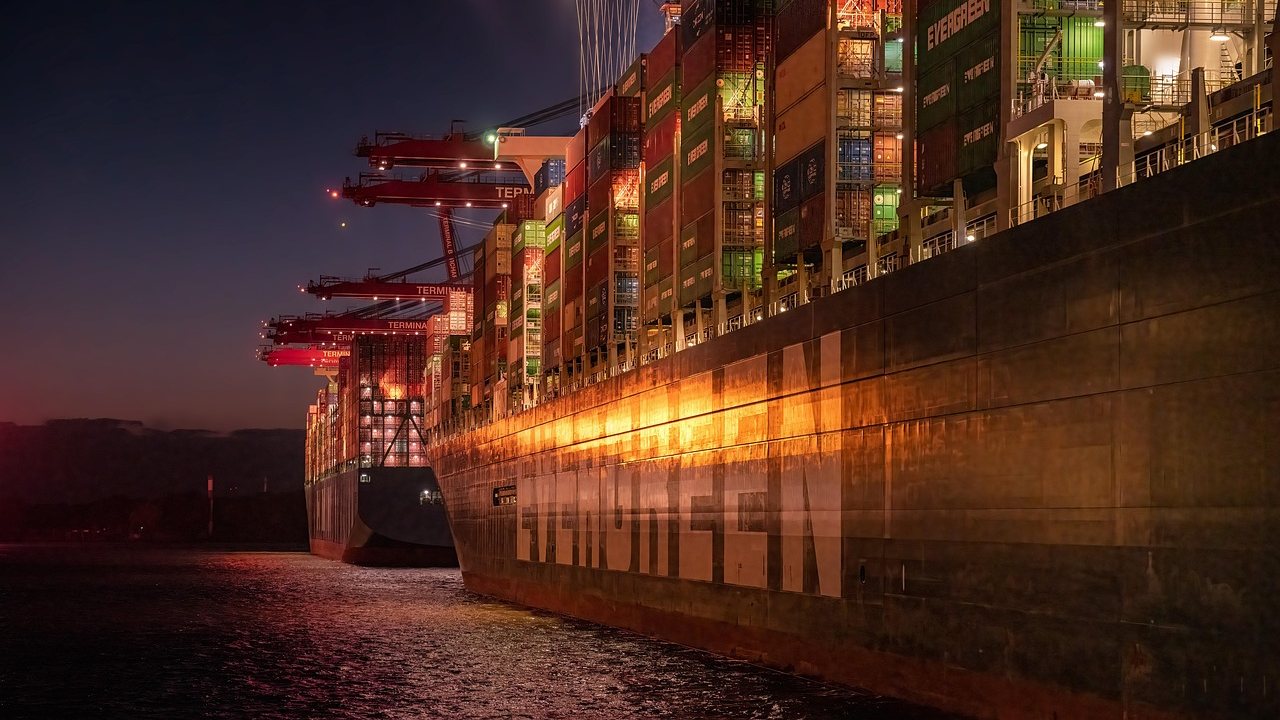
For the first time in its history, Audi is building a car factory on American soil — and the fingerprints of Section 232 tariffs are all over the blueprint. Governor Brian P. Kemp and Audi CEO Gernot Döllner announced that Audi will open its first U.S. manufacturing facility in the State of Georgia. Headquartered in Ingolstadt, Germany, Audi plans to invest approximately $4 billion in a state-of-the-art manufacturing facility at the Middle Georgia Megasite, delivering approximately 4,500 new jobs to middle Georgia. For U.S. importers, freight forwarders, and auto parts suppliers, this announcement is not just political theater — it is a signal that tariff-driven reshoring is now reshaping the very geography of global automotive supply chains.
The Tariff Math That Forced the Decision
Unlike rivals BMW AG and Mercedes-Benz Group AG, Audi relies exclusively on imports from Europe and Mexico in the US, subjecting it to punishing tariffs. That exposure turned existential quickly once Section 232 hit. Last year, Trump's tariffs dealt Audi a 1.2 billion euro ($1.4 billion) blow, as it imports all its vehicles for the U.S. market from Europe or Mexico. Meanwhile, Audi sales have fallen for two consecutive years and slid 7% in the first half of 2026 as fierce competition in China and U.S. tariffs hit demand, with U.S. sales down 16% this year.
The Section 232 regime that created this pressure is well established. Section 232 tariffs impose a 25% duty on imported automobiles and certain automobile parts, authorized under Section 232 of the Trade Expansion Act of 1962 based on a finding that automotive imports threaten U.S. national security. The tariff on finished vehicles took effect April 3, 2025, with auto parts tariffs following on May 3, 2025. Audi's top-selling Q5 SUV is hit particularly hard because it does not comply with the USMCA, the trade pact with Canada and Mexico Trump negotiated in his first term. With no USMCA shelter and no domestic production to fall back on, every Audi sold in America carries a 25% tariff penalty on top of base duties.
What Is Being Built, Where, and When
The plant is to be built at the Middle Georgia Megasite in Peach County, near the city of Macon. State officials identify the location as Peach County, on a 1,474-acre property along Georgia Highway 96 near Interstate 75. The site was not chosen at random. Audi points to an investment-ready site, a skilled workforce, an established automotive supplier network and logistics infrastructure as reasons for choosing Georgia. It also says the megasite has room for expansion. Critically for freight planning, the site has Norfolk Southern rail access and sits under five hours by rail from the ports of Savannah and Brunswick.
On the production side, the plant is expected to assemble the Audi Q7, Q8, and Q9 SUVs. Audi expects to begin grading in 2027 and construction on the new facility in 2028, with full production expected in 2031 at an annual capacity of 200,000 units. Separately, Audi is also expected to announce plans to build 25,000 vehicles in South Carolina, with those vehicles to be assembled at VW's off-road brand Scout Motors' $2 billion plant that is under construction in Blythewood, South Carolina.
The Tariff Relief Dimension: What Importers Should Watch
The factory announcement did not arrive in a vacuum. According to Bloomberg, Trump and the company will remain in talks on some kind of tariff reprieve, though any changes would apply to all manufacturers who expand US production, not just Volkswagen and its brands. Talks are focused on a potential deal that would give some sort of proportional tariff relief credit to manufacturers that bring concrete commitments of new production to the US. The factory plan does not amount to a completed tariff agreement. Bloomberg reported that Volkswagen and the administration would continue discussing relief tied to new U.S. production commitments. Any resulting credit would be structured for manufacturers that expand American production rather than as an Audi-only exemption. No rate, formula, effective date or final agreement was announced.
This matters enormously for every auto-adjacent importer. If a proportional tariff relief framework is ultimately codified, it could create a two-tier competitive landscape: assemblers with domestic capacity earning credits, and pure importers absorbing the full 25% Section 232 burden without relief.
The Near-Term Reality: Audi Is Still an Importer Until 2031
Here is the critical point that separates the political narrative from the supply chain reality. Building an assembly plant generally takes years, and full production in Georgia is not due until 2031. Until then, every Audi sold in the US will remain an import. That means a Macon facility would reduce Audi's dependence on imports once production begins, but it would not eliminate near-term tariff exposure while the factory is being built. For importers of European or Mexican-made Audi models, the Section 232 clock keeps ticking at the full 25% rate for the foreseeable future.
Additional positions would be created at suppliers, logistics firms and service providers. Local production would reduce dependence on international supply chains and exchange-rate fluctuations. At the same time, Audi would be manufacturing closer to its American customers and strengthening its competitive position against carmakers with their own US production. But those benefits lie years away.
Supply Chain Ripple Effects: Parts, Ports, and Procurement
The Audi announcement is part of a broader reshoring wave that is now pressuring parts suppliers across the transatlantic corridor. Georgia has emerged as a significant automotive manufacturing hub, with Kia operating a major facility in West Point and numerous tier-one suppliers throughout the state. Georgia Quick Start will work with the Technical College System of Georgia to support training, with a dedicated training center planned.
For importers who supply components to the auto sector, the Section 232 auto parts tariff is the more immediate concern. The Section 232 tariff on auto parts is a 25% duty, added in 2025, that applies only to a defined list of HTS-classified components rather than to auto parts as a category. The rate depends on how the part is classified and what documentation supports that classification. That classification nuance — not the headline rate — is where importers lose money, and where professional customs guidance becomes indispensable.
For parts sourced from USMCA partners, there is a partial shield. Automobile parts meeting the USMCA rules of origin are not subject to the 25% Section 232 tariff. For Taiwanese-origin parts specifically, listed Taiwan-origin parts have been capped at a 15% combined rate since May 1, 2026. But for European-sourced components destined for a US-based Audi supply chain in the years before 2031, the full 25% burden applies absent any new agreement.
What This Tells Every Importer About the New Tariff Era
Audi's Georgia decision is a textbook case study in how sustained tariff pressure eventually overrides even deeply entrenched sourcing logic. Audi is the only German car brand without a US factory, and building there has been under consideration for at least two decades. Europe's biggest carmaker has considered adding another American manufacturing site on and off for years, including dating back to 2018 during Trump's first term. Audi had repeatedly delayed a decision, with VW CEO Oliver Blume saying the group cannot afford to pay high tariffs and heavily invest in new production capacity at the same time. Eventually, the tariff cost became the larger risk.
The lesson for importers in any sector is blunt: when tariffs make the landed cost of an imported product structurally uncompetitive, capital eventually follows the policy signal. The auto industry is now demonstrating this at billion-dollar scale. Importers across electronics, machinery, and consumer goods are watching a preview of what extended 25% tariff regimes can do to global production geography.
How ASR Can Help
Whether you are importing auto parts under the evolving Section 232 framework, restructuring supplier relationships ahead of a reshoring wave, or simply trying to understand how a tariff classification ruling could change your landed cost calculation, ASR WorldWide Express is here to help. As a licensed freight forwarder (FMCSA MC# 1667345-B, DOT# 4286843, SCAC AZCB), we coordinate end-to-end logistics and work with trusted licensed customs broker partners to ensure your shipments move efficiently and compliantly through U.S. Customs. Our team in Miami monitors regulatory developments in real time so your supply chain strategy is built on verified facts, not guesswork.
Call us at +1 786 373 3003 or email shipping@asrwe.com to discuss how the current auto tariff environment affects your specific import program.
Important Disclaimer
This article is provided for informational purposes only and does not constitute legal, tax, or trade compliance advice. Tariff rules, HTS classifications, USMCA eligibility determinations, and Section 232 exemption procedures are complex and fact-specific. Importers should consult a licensed customs broker or qualified trade attorney before making sourcing, classification, or duty-payment decisions based on any information in this article. Rates and regulations cited reflect publicly available information as of October 25, 2026, and are subject to change.